Something Other than Minecraft this Summer?

Share this post via email


Submit

Do you feel like all your child wants to do over the summer is play video games? If so, have we got a great option for you!

Reading Together
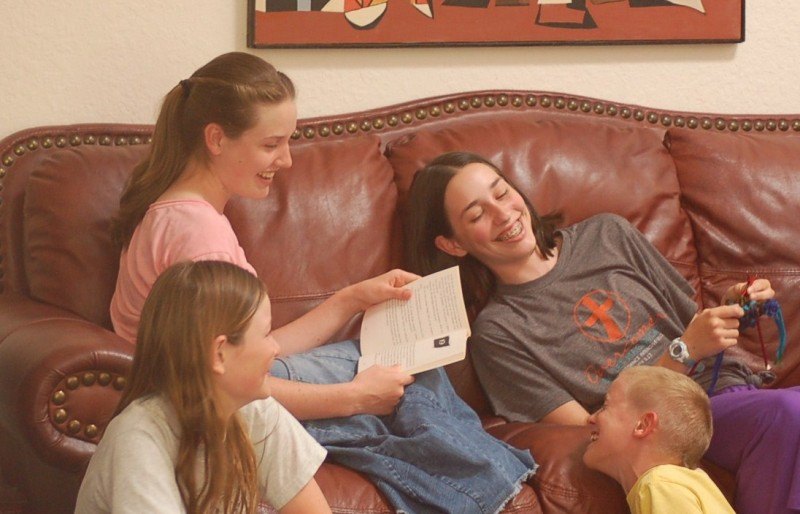
Sonlighters Katie, Lizzie, Abigail, and John enjoy a book together

But first, a sad story involving video games (skip this paragraph if you don't care about gaming)...

My friend recently got an Xbox One. I was excited to try it out with him, thinking multiplayer games must have much improved since the Nintendo Goldeneye of 1997 [if we get a chance to play together, I play Boris]. Sadly, the games of today disappointingly lack an in-console two-player option. If we each owned a $400 machine, a $50 controller, and a $60 copy of the game, we could play together over the internet. ...yeah, not happening. I am rather annoyed that the "new approach to game design" and "next-generation competitive multiplayer" means killing split screens that have been a mainstay of gaming since I was 15. <sigh> Back to summers and other compelling entertainment options since video games have taken such a massive step backward...

Give your child books to read this summer. Printed text may not have the same hypnotic lure of a glowing screen, but great stories pull in even the most dedicated of gamers. I've played many computer games, but I've also found books I couldn't put down. I really like what Kathryn shared with us on Facebook:

Thank you for introducing us to the Spy Mice series through your Summer Readers. Do you have any idea how refreshing it was to hear my son talk for 10 minutes with great animation about something other than Minecraft?!?!

As one who has listened to youngsters -- not to mention my wife -- talk in great detail about Minecraft, I can relate.

If you want your children to experience worlds beyond the screen, grab some Summer Readers and watch them find joy in great books as well.

 ~Luke Holzmann
Filmmaker, Writer, Guardian

P.S. One more reminder: Books can be a group activity! For about $25, you can read a stack of titles to the whole family. That's way better than the overpriced gaming system my friend just bought... Order your Summer Readers today.

Share this post via email


Submit
Tagged , | 2 Comments

Quick Reference: Curriculum and Learning Styles

Share this post via email


Submit

I offer the following as a reference to help you get a quick idea of different educational approaches. I have tried to be fair and fun in my presentations.

Curriculum Styles

  • Traditional/Textbook: You just need a summary of important information. Visual (reading); auditory (lecture).
  • Unit Studies: Do a project and focused study of something. Kinesthetic (projects).
  • Literature-Based/Living Books: Read great stories and you're set. Auditory (read-alouds); visual (reading).
  • Classical Education: Why read fiction when you can read Aristotle? Visual (reading), auditory (discussion).
  • Unschooling/Relaxed Homeschooling: Kids love learning; don't try to force it. Visual, auditory, kinesthetic (depends on the kid).

Learning Styles

  • Visual: See it and you've got it.
  • Auditory: Hear it and you remember.
  • Kinesthetic: Do it and you understand.

Sonlight Curriculum

How does all this line up with Sonlight? As a literature-rich homeschool curriculum, we do a lot of reading, both on our own and out loud. But we also offer more hands-on activities in the elementary grades than most of our competitors with Core Tips and Science programs built around fun experiments.

So...

Sonlight is great for visual and auditory learners with enough kinethestic activities to engage your kids, no matter their preferred learning style.

 ~Luke Holzmann
Filmmaker, Writer, Guardian
Share this post via email


Submit
Tagged | 15 Comments

From Luke's Inbox: How Did You Make the Disembodied Hand?

Share this post via email


Submit

How did you make the Disembodied Hand for MathTacular4?
-Travis and Heather

If you're not familiar with MathTacular4 and the Disembodied Hand, you can catch a brief glimpse of this fun "character" at the very end of the MathTacular4 trailer:

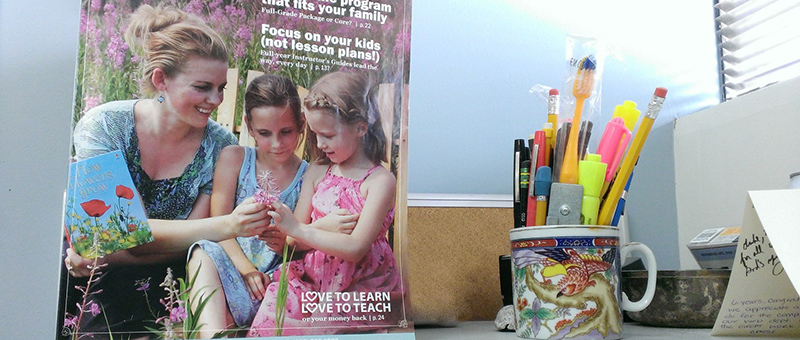
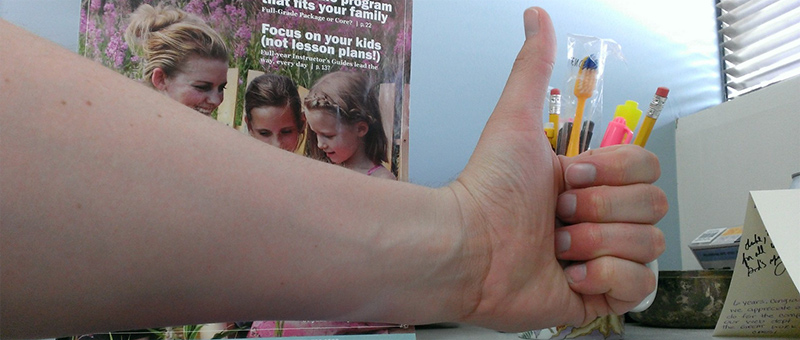
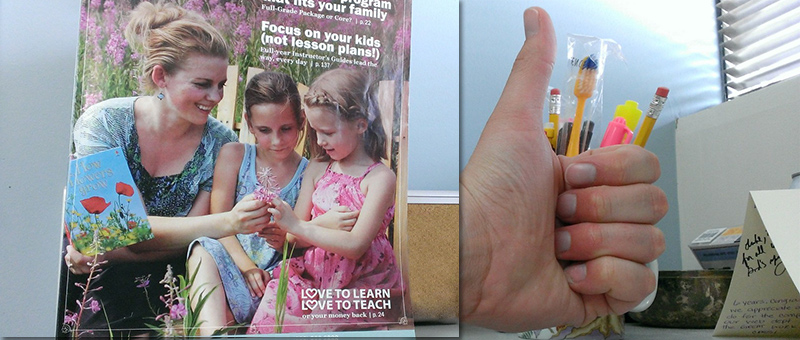
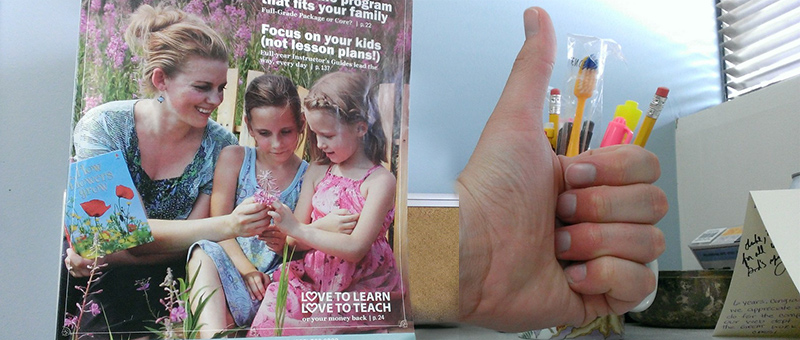
This effect is actually a really old trick. Basically, I take a picture of the background and then cut it out and paste it over the arm I'm covering up. I talk about this in the Behind the Scenes section of the DVD starting at 4:34, if you haven't had a chance to watch that yet. I'll try to make it a little more clear here.

Disembodied-Hand1
Step 1: Take a picture of the background.

Disembodied-Hand2
Step 2: Shoot your actor in front of the background without moving the camera.

Disembodied-Hand3
Step 3: Cut out a piece of the background to cover up the actor's body.

Disembodied-Hand4
Step 4: Clean up.

You can, of course, go the other way and cut out the hand itself, but often that requires more work.

I hope that helps! If you interested in learning how to make movies and ever have any other questions, we have "Digital Flatline" on the Sonlight Student Forums. I'm there and available to help. I also run a free film school -- not at all affiliated with Sonlight -- over at Production-Now.com.

If you haven't picked up at least one of the MathTacular DVDs yet, you should. It's an entertaining and informative way to keep your kids interested in math even over the summer.

 ~Luke Holzmann
Filmmaker, Writer, Guardian
P.S. By the way, Travis and Heather sent me physical letters in the mail. I was so excited! Please feel free to write me snail mail if you like.

P.P.S. Travis and Heather, if you happen to read this post, don't worry: I sent you a physical letter back as well <smile>.

Share this post via email


Submit
Tagged , , | Leave a comment

What Does It Mean to be Educated?

Share this post via email


Submit

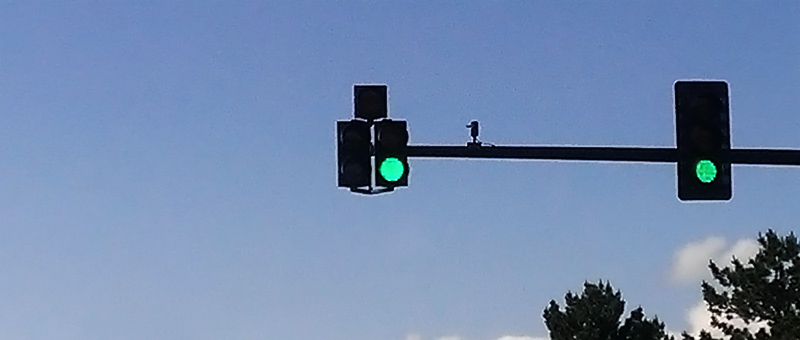
I recently wrote that education is more than simply taking classes and passing tests. This is frustratingly clear in things like driving tests. I took my student to try to earn her license yesterday. Unfortunately, the stress of the situation weighed heavily on her and things didn't go super smoothly. Ultimately, she was failed because she didn't realize -- in the moment -- that she could turn left on a green once traffic cleared after the turn signal.

Traffic-Light
Traffic Light

She passed the written test months ago. She's studied. We've spent hours driving around. But all that education does not make her "road ready." I need to spend more time driving with her before her driver's education is complete.

Definitions

Google the word "educated" and you'll find the definition is "having been educated." (I guess Google doesn't care that you're not supposed to define a word using said word. <sigh>) So I propose this definition: You are educated when you can use or apply your instruction/training in life and accomplish the tasks before you.

My student will have learned how to drive when she can drive safely on her own.

Given my working definition, questions of being "more" or "less" educated prove silly. Am I, a guy who writes blog posts, less educated than a woman who performs surgery? Would she be less educated than an inventor creating the next propulsion mechanism? Who is more educated: A grandmother who has seven grandchildren or a twenty-something who has taken six Master's level courses in Information Systems technology?

I'm not aware of a word to distinguish between one who has taken many classes compared to someone who has learned much through life experience. But the reality is that there is always more to learn, postdoctorate or postpartum. This life-long learning thing is a reality of our finite humanity, not just a nice phrase for educators.

Once you have developed an appetite for learning, you'll never feel "less educated." That's not a phrase you'll even consider because your focus is different: You're not done. You're always growing. I found, a few Father's Days ago, that feeling well-educated hindered me. Far better to be like my dad who -- albeit incredibly informed -- maintains an attitude of humble ignorance, always ready to take input from others.

Sitting in classes does not mean you're being educated. Passing tests says little about how much you have learned. That's not to say that classes and tests don't help (they can!), but it should be an encouraging reminder that education is much more than either. If anything, tests and classes help foster an education, they are not, themselves, an education.

Academics

Academics are important (please read that post). Academic excellence is a huge part of being educated, and it honors God. And this is where my proposed definition of education -- "being able to do what you need to do" -- falls short. A large portion of becoming educated requires us to expand beyond ourselves.

Let's say, for the sake of example, that I wanted to become the next Alton Brown. I have lots of experience with eating food and making quirky, edutaining video vignettes (such as the ever popular Discover & Do and MathTacular DVDS). I could learn how to cook more than macaroni and cheese, hone my film making skills, and eventually become a star of television culinary arts. But would I be "educated"?

In one sense, yes; I'd know quite a bit more about food preparation than I do now. But in a very real sense, no; if all I knew was film and food, I'd be missing out on much of life.

That is why Sonlight offers a more "liberal arts" approach to learning. Trade schools and interest-focused education can be great for equipping for a job or hobby, but a prevailing schooling experience should provide a far broader perspective.

  1. The more you learn, the more you can learn. I've been told that acquiring multiple foreign languages allows you to think better and learn other languages more quickly. But I don't have to speak Latin or Spanish to see this in my own life. When I learn a new English word, suddenly I recognize it everywhere. My increased knowledge enables me to take part in that information rather than letting it circumvent me.
  2. Reality interconnects. Focusing overmuch on one subject disconnects it from the wider world. A liberal arts education allows us to make connections across the broad spectrum of disciplines and human knowledge.
  3. You can discover new interests. The broader our experience, the more opportunities lie before us. If I had never been exposed to woodworking and Legos, I wouldn't have realized that I enjoyed building things. Give your kids many chances to find their passions.
  4. You use everything you learn. It's true.

To be educated, then, means that you can do what you need to do and have a broad foundation upon which you can grow.

Outcomes

A truly great education does more than just set you up for both the present and the future. A well-educated person has been given a hunger to learn more. Thus, a huge part of any education should be the art of learning how to learn. You and I, and your children, will never know everything.

A great education is only the beginning of an education.

 ~Luke Holzmann
Filmmaker, Writer, Guardian
P.S. Do you want to instill a life-long love of learning into your children? Sonlight's homeschool curriculum is guaranteed to help you love to teach and your children love to learn. And given everything we've just discussed about what it means to be educated, this is the curriculum for you.

P.P.S. Okay, maybe not. Sonlight is not for everyone. If you haven't at least glanced over the 27 Reasons NOT to Buy Sonlight, please do. I want you to love your homeschooling experience more than I want to sell you curriculum. Of course, with our 1-year money-back guarantee, I think you'll quickly see for yourself that Sonlight provides exceptional outcomes.

Share this post via email


Submit
Tagged , , , , | 1 Comment

From Luke's Inbox: What About AP Classes?

Share this post via email


Submit

What do you think about the push for dual credit and AP classes? We sometimes feel we are behind since we aren't in that super competitive circle. And yet, I feel our more peaceful approach has not left us any less educated than our stressed and pressed for time peers.

It is nice to get college credit before going to college where credits become expensive. But it's very easy to make that overkill. Far better to love learning and continue to lay a foundation for a life of further education. You are absolutely right: Education is more than simply taking classes and passing tests.

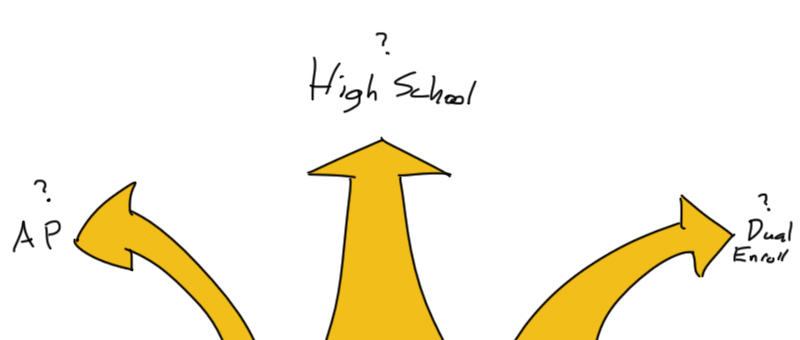
High-School-Choices
Which Is Right?

Having said that, I do want to give a big nod to Ken Chapman's series Why Skip High School. That was not at all my path, but having seen the careful planning and great results, I think this idea makes a ton of sense if you want to pursue that. I loved and hated my high school years; a community college campus is likely more mature than a bunch of high schoolers (not surprising at all). Opting to dual enroll in homeschooling and a local college may be much better for your student than a local high school experience. Notice that their goal was not to have young college graduates and add stress, but to spare students four wasted years in a cruel and stupid world.

I took a far more traditional route, transitioning from homeschool to high school. I took two AP classes (Economics and Psychology) and a math class that also earned me college credit (dual credit). I needed Psych and Math for my degree, so I was able to skip both at Biola. Economics came over as an elective. This freed up my college schedule a bit so I had more options and flexibility, which was nice. This fit with my schedule and allowed me to enjoy certain topics at more depth, but I never felt pressure to cram in AP credits.

Some of the kids I know today, however, take, like, five AP classes a semester. They are stressed to the max and do not enjoy their studies. Plus, despite all this effort, they've had to take many classes all over again in college. More beneficial would be to slow down and really learn the content, such that you could take a random Psychology test at a University for fun and do just fine (that's a testament to how great my high school Psych class was).

If an AP or college credit course looks appealing to your student, go for it. If skipping four years of bland social interaction seems like a much better use of your student's time, do it. And if taking these four years to learn and grow at a peaceful pace would be more beneficial, do that.

We definitely do not need more pressure on our kids. Take opportunities that make sense, and be free from any guilt for those things that don't fit.

 ~Luke Holzmann
Filmmaker, Writer, Guardian
P.S. On Friday, I plan to dig a little deeper into the idea of what it means to be educated. I think it is important to flesh out why a more peaceful approach to learning may not leave you "less educated" than those taking tons of classes.

Share this post via email


Submit
Tagged , , , , | 4 Comments

5 Traits of a Supportive Homeschool Dad

Share this post via email


Submit

Father's Day is coming up--you got the greeting cards, right?--and this got me thinking about my role as a father in relation to homeschooling. It didn't start out so well.

When my wife first suggested that we homeschool our children, I was reluctant to pursue the option. Among other things, I had (unfounded) concerns about a common objection to home education--"What about socialization?" But as we began the process and stuck with it, I realized the immense value of home education. I've also realized the importance of being a supportive homeschool father.

So what are some key traits of a supportive homeschool dad? Here are five:

1. Don't expect your wife to do it all. Like anyone, homeschool moms have limited amounts of time, energy, and ability. Offer to help where you can. You don't have to know everything about the curriculum you are using to help, either. You can offer to read a book to the kids, do some tasks around the house that your wife usually handles, or take the kids out and let your wife have some quiet time.

2. Spend meaningful time with your children. I know, you've worked hard all day and you come home and just want to rest--have dinner, plop yourself on the couch and watch a movie, or play with that latest tablet app that everyone is obsessed about. But don't neglect to spend time with your children. They need you and you need them. Even if you're tired, take time to meaningfully interact with your kids. Do something with them. Play outside, grab a board game, or do something that they have an interest in. This will also give your wife a break.

3. Enjoy the little things. Ok, I took this one from the movie Zombieland, but it applies to the homeschooling dad, too. Take your wife out for coffee, go with her on a shopping trip, or get her that book on her wish list that she's wanted for a while. There are lots of little things you can do that will offer encouragement and support.

4. Take time to listen. Learning to listen well is difficult, especially for men who are more interested in determining what the "problem" is so they can fix it. Turn your phone off (or other distracting devices) and genuinely take the time to really listen. If your wife has had a rough day, home with the kids for hours and hours, she might just want you to listen to her attentively without interruption.

5. Avoid always trying to "fix" things. I don't mean this in reference to fixing a broken screen door or that leaky faucet (by all means, go fix them), but in relation to problems or challenges that come up in the ordinary course of home education. Sometimes difficulties that arise don't have a quick or easy fix. As fathers we can't just squirt some WD-40 on our kids and be done with it. But we can listen, interact with our spouse, and try to work things out together.

Are there times when I don't do these things? Unfortunately, yes, but it helps to keep them in mind.

What are some things your husband does that encourage you in relation to homeschooling?

Robert Velarde
Author/Educator/Philosopher

Share this post via email


Submit
Tagged , , , , | 1 Comment

When to Stay Within the Lines

Share this post via email


Submit

My wife has been helping a family at church by watching their not-yet-two-year-old. She's a cute kid with a giant impish grin and a vocabulary that's growing beyond "car" and "motorcycle" (her dad's a mechanic and loves cars, so she does too). Last Thursday, after getting home from work, she's outside with my wife drawing on the driveway with chalk. Suddenly I'm the person to color with and she asks me draw a heart.

I do.

She colors it the way toddlers without fine motor control do: Three lines that radiate from the center and spill out into the wider world. And, like all youngsters, she loses all interest for a moment to go wander over to the car before returning, chalk smudges decorating her shirt and next to her nose where it itched.

Chalk-Heart
Coloring in the Heart

In art and creativity, I see no reason to stay within the lines (unless, like me, you prefer that). But boundaries are important, even -- especially? -- for a 2-year-old. I talk about looking both ways before crossing the street and remind her that she needs to eat her snack at the table.

Many lines are dangerous to cross. I regularly remind the student I'm teaching to drive to "stay in your lane." She doesn't like it when I yell at her to slow down around turns; frankly, I don't like when I feel the need either. I'm still trying to figure out how to get her to recognize that the brakes are her friend.

Moral lines are even harder to help people recognize. At Movie Night on Saturday one of "my kids" told me about her out of state boyfriend's visit. I guess they had decided, in his hotel room, that they would move in together when he moved out our way. "We've been together for a year. I think that's a reasonable amount of time. You know," she told me, with all the wisdom of someone not yet 19, "some people really love each other but then discover they simply can't stand living together." This is a girl who goes to church.

How did we get here? When did morality become like lines of chalk to color in instead of guidelines to keep you safe?

I don't know. I'm not sure how this generation drifted into this view of reality. But it's dangerous, like not bothering to check for cars before stepping into the road. I very much appreciate Kate's reminder:

Even as [our children] get older, we have to remember that it's our job to set their boundaries. We can give them some leeway but if they can't handle that much responsibility, it's time to rein them in. At the end of the day, we are in charge.

Boundaries. That word continues to be the very thing that seems to define this next generation by their lack of them.

A video linked from the BibleMesh blog reminded me that moral decline happens when people no longer voluntarily follow the law. I blogged about Vishal Mangalwadi's observations on this in my post on our growing culture of theft. (My mom gave a great overview of Mangalwadi's thesis of our culture's Christian roots.) I don't like doom and gloom projections or fear mongering of the faithful. But I do want to encourage you as you raise up the next generation: Teach them to stay within the lines, why it's important, and how to tell the difference between preference and responsibility, chalk and street lanes.

If that needs to start with a simple reminder that naps are important, so be it. As homeschoolers, we have the opportunity to demonstrate these realities and offer grace day in and day out. Take advantage of that blessing!

 ~Luke Holzmann
Filmmaker, Writer, Guardian
Share this post via email


Submit
Tagged , , | Leave a comment