How to Grow Spiritually

Share this post via email


Submit

Scripture is amazing. There is so much to discover and uncover within the text. And I absolutely love reading the insights others have gleaned. Mark (aka pastor guy) has a great post about Jacob's spiritual growth that shed new light on a familiar story for me. I had never considered how much Jacob's theology had developed in the twenty years between when he ran away from his brother and headed back to meet him again.

As Mark points out, it's not age that develops you, it's walking through life experiences and learning to look to God in them. His goodness changes us if we let it.

I know I need to acknowledge His provision and respond in thanks to grow. But I have found I can grow when I look to the lives of others as well. When I read Scripture, I have opportunities learn how God has been faithful in the past. I can grow in faith as I see His faithfulness. But it's not just Scripture. My theology developed as I read missionary biographies and saw God work in more recent history as well!

Sometimes we need to learn through the "school of hard knocks" as God sustains us through the dark times. Other times we can travel miles on the backs of those who have gone before us. And I am grateful for all the opportunities I've had to do just that through Sonlight's Core packages. I can't imagine how immature my faith would be if it were not for the great cloud of witnesses I have learned from and about.

I love how the Sonlight Giving Adventures present us with yet another opportunity to walk a few more steps down the road. We get to partner with God in work He is doing on the other side of the globe. We get to see Him move in the lives of others, and us! We can make a difference right now. And the more we follow Christ's lead, the more we will grow closer to Him.

 ~Luke Holzmann
Filmmaker, Writer, Guardian

Share this post via email


Submit
Tagged , , , , | Leave a comment

Why Bother Teaching? They'll Forget It All Anyway

Share this post via email


Submit

Last week I mentioned that daily lessons aren't nearly as important as how your children develop. Like you, they will end up forgetting much--most?--of the details of what they learn in school. But this raises a question:

Why bother teaching kids stuff they're going to forget?

Erased-Blackboard
Erased Lessons

I'm not an expert. I'm a guy who grew up homeschooling and has succeeded to various degrees in every educational venue I've encountered. My theories and ideas are based on what little I've read and heard, and a lot on my own experiences. That's why I'd love your input on this. But in my estimation...

  1. We use everything we learn. My mom says this often, and it's proven largely true in my life. Spanish? I've forgotten most of it, but I've used it. It's amazing how practical knowledge can be. <smile>
  2. You build off ideas, even if you forget the facts. It's true that I've forgotten things like the Ludlow massacre, but my exposure to such events have helped shape my ideas about business, government, personal responsibility, and economics. The fact that I forget the details of what Brittany and I talked about last week doesn't negate the reality that spending time with my wife strengthens our relationship. Gaining knowledge, even if you "lose it," is a vital part to developing our perspective on the world.
  3. Academics are important. There's a impulse to brush off academic knowledge/skill in favor of character. But this would miss an important nuance of reality: Working to prove ourselves academically is part of building our character. I firmly believe that character is important, but remember that academic excellence is part of that.
  4. We remember more than we let on. Memory is a funny thing. When my pastor asks us to remember something he preached on the week before, I draw a blank. But when he mentions the key idea or one of the stories he told, it all floods back. I don't know the physiology or psychology behind this phenomenon, but I see a distinction between recall and retention. In school, the focus is regurgitation (recall) so you can reproduce on a test what you were shown in class. But when I fail--yet again--to bring to mind how many tablespoons are in a cup, it's an indication that I haven't used it enough to have it in that part of my mind. When I verify that it is, indeed, 16, I'm not surprised. Instead, I find myself saying, "Oh, that's right."
  5. Learning builds pathways. I've been told that learning a second language helps you think better. Learning a third increases your creativity of thought even more. By the time you hit eight, you're, like, amazing. Or something like that. And this model works for all knowledge. Learning math helps with music. Building things helps with math. Music helps with writing. And on and on the various disciplines connect and intersect. Even if you forget "everything," your brain has developed a new way of seeing the world, and you are able to learn and do more. But since I have yet to master a second language, what do I know?

There are, I'm sure, more reasons to take the time to teach kids stuff. What are your reasons for doing so?

 ~Luke Holzmann
Filmmaker, Writer, Guardian

Share this post via email


Submit
Tagged , , | 1 Comment

Let's Be Old-Fashioned: Character Over Personality

Share this post via email


Submit

Are you an introvert or an extrovert? What about your kids?

More and more books that discuss the modern bias against introverts are showing up on my radar. There was this one about introverted pastors. The sections I heard were pretty insightful. And then I revisited an old email about Susan Cain's The Power of Introverts. Someone has plagiarized segments of her book and turned them into a rather dry RSA style animation. I was amazed at the portion about the shift from character to personality. Susan traced cultural changes that led us to focus on appearance over substance.

The implications are all around us. The first that springs to mind are the hordes of reprehensible politicians elected again and again for their smooth speech or party affiliation (and this absolutely happens on both sides). But the book digs deeper than all that. In the end, school, prescriptions, leadership, and decision-making are all negatively impacted by this focus. Susan fleshes some of this out in her TED Talk.

As homeschoolers, we have a tremendous advantage here. In many ways we are "old school" with an emphasis on personal growth, familial ties, and real achievements over satiating our peer's demands for the uniformity of "cool." Character is what matters most in our work, not presentation.

Top-Hat-and-Monocle
Top Hat and Monocle

The more I thought about the disparity between today's classroom and us, the more I realized how it can be a very good thing that we are old-fashioned. May we never cling to the past simply for the sake of tradition, but may we continue to reap the benefits of wisdom undeterred by the latest fads.

 ~Luke Holzmann
Filmmaker, Writer, Guardian

P.S. I'm an extroverted introvert. I'm loud, confident, outgoing, and don't mind speaking to groups. But I prefer to sit at home, write, and have deep conversations. I can't figure out small talk. I loath "networking." I do fine as the host of a party, but I fade into the wallpaper if I'm a guest. And as much as I enjoy helping people, at the end of the day I'd like to sit alone in front of my computer and "just be." So, in many ways, I've got it pretty good. I'm a highly functional leader with an underlying desire to be alone. This means I have opportunity to be creative while also visible in the public sphere.

How about you?

Share this post via email


Submit
Tagged , , , , , , | 2 Comments

The best time of year ...

Share this post via email


Submit

Fall LeavesMany people look forward to Spring every year, because it's a time of new beginnings. Others claim that Christmas is their favorite time of year ... with all the decorations and music and good food and secrets. In our small group yesterday, the leader asked us to share our favorite time of year. Hands down, autumn is the very best time of year, in my opinion.

Here in upstate NY fall rolled in on Sunday with crisp temperatures and changing leaves. As I took a deep breath of bonfires and ripening apples that afternoon, I pondered why I so enjoy this time of year. Lots of reasons came to mind, but many of them had to do with the great fun we enjoyed in our homeschool when this season rolled around.

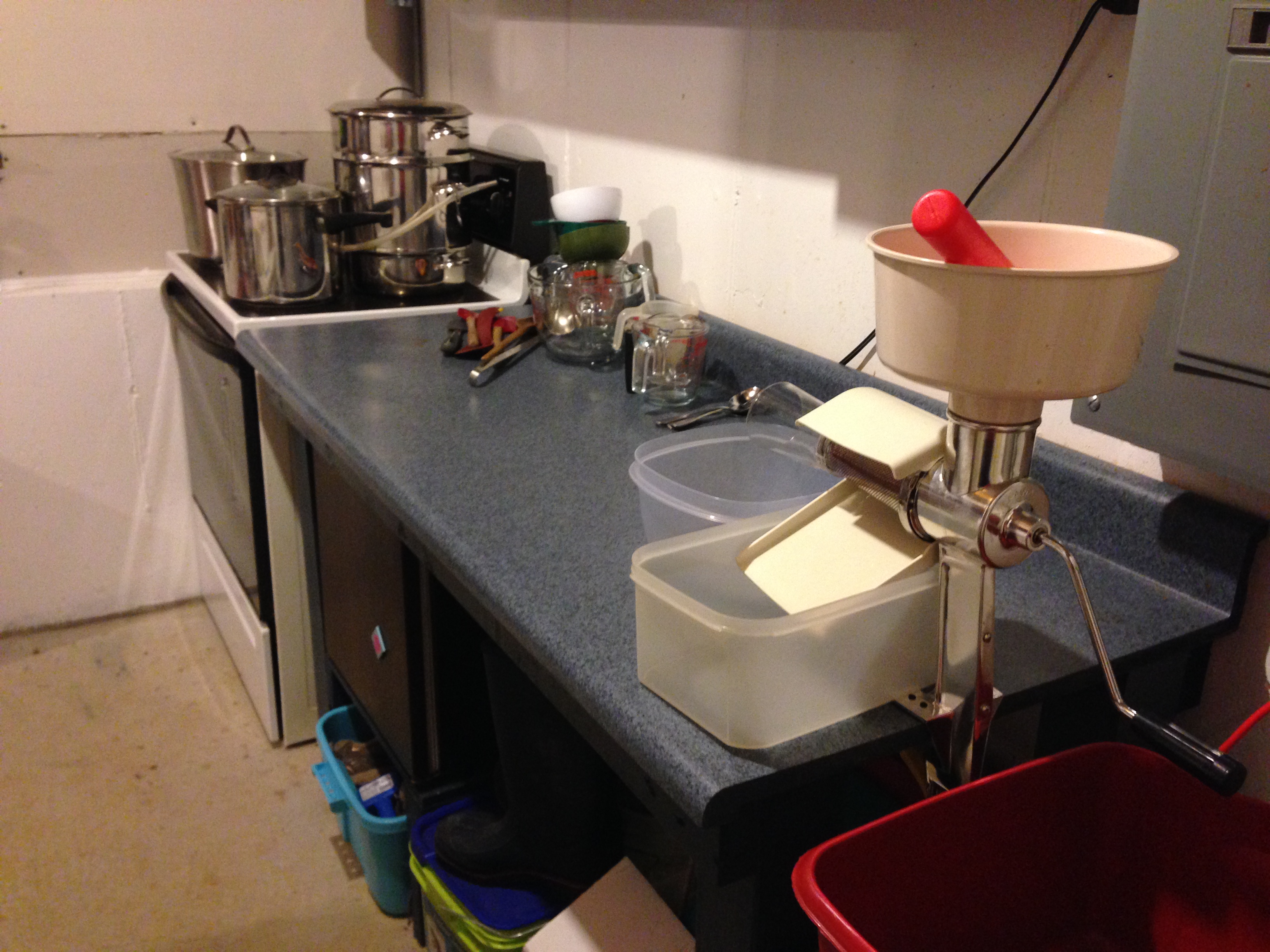
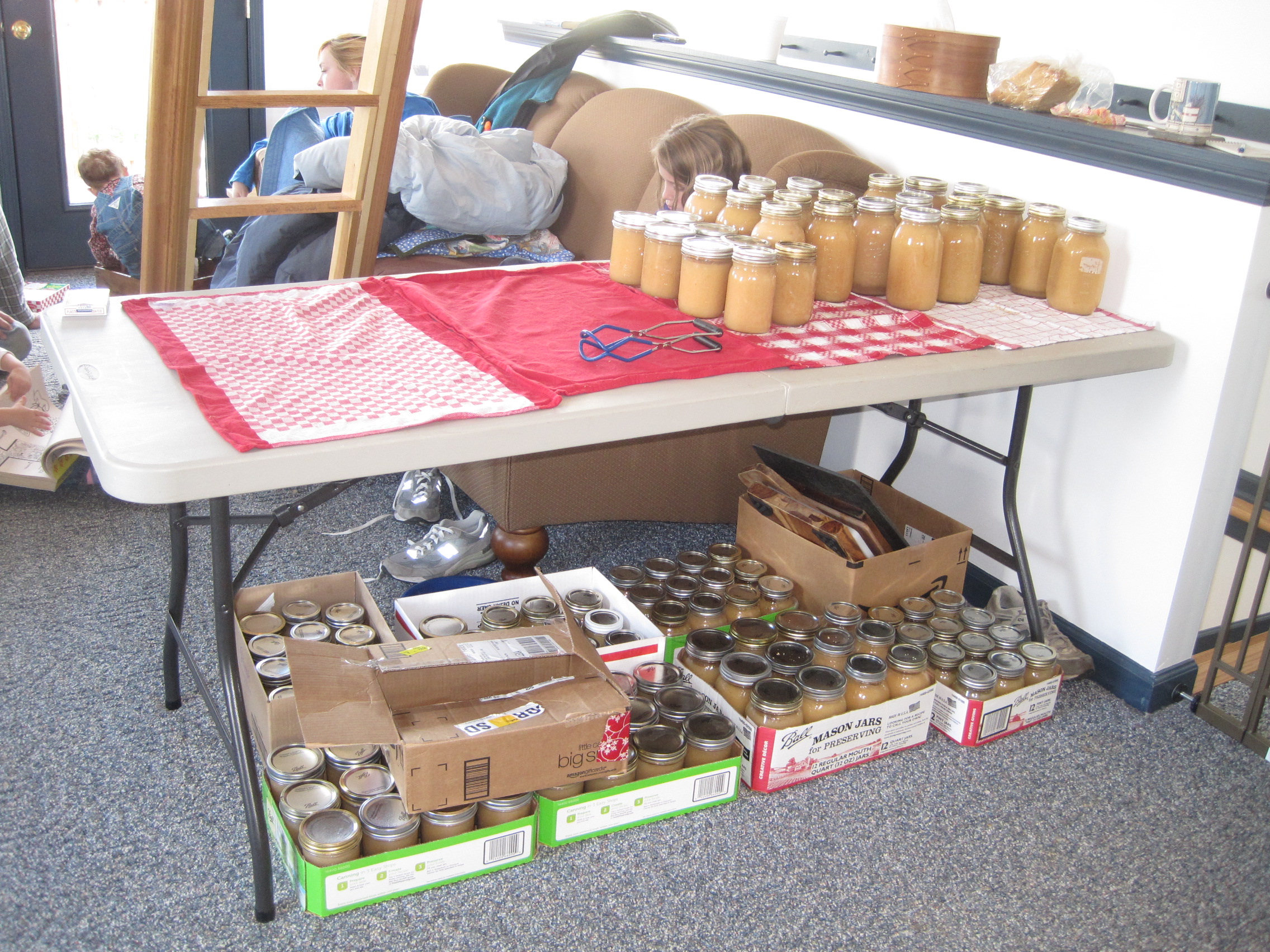
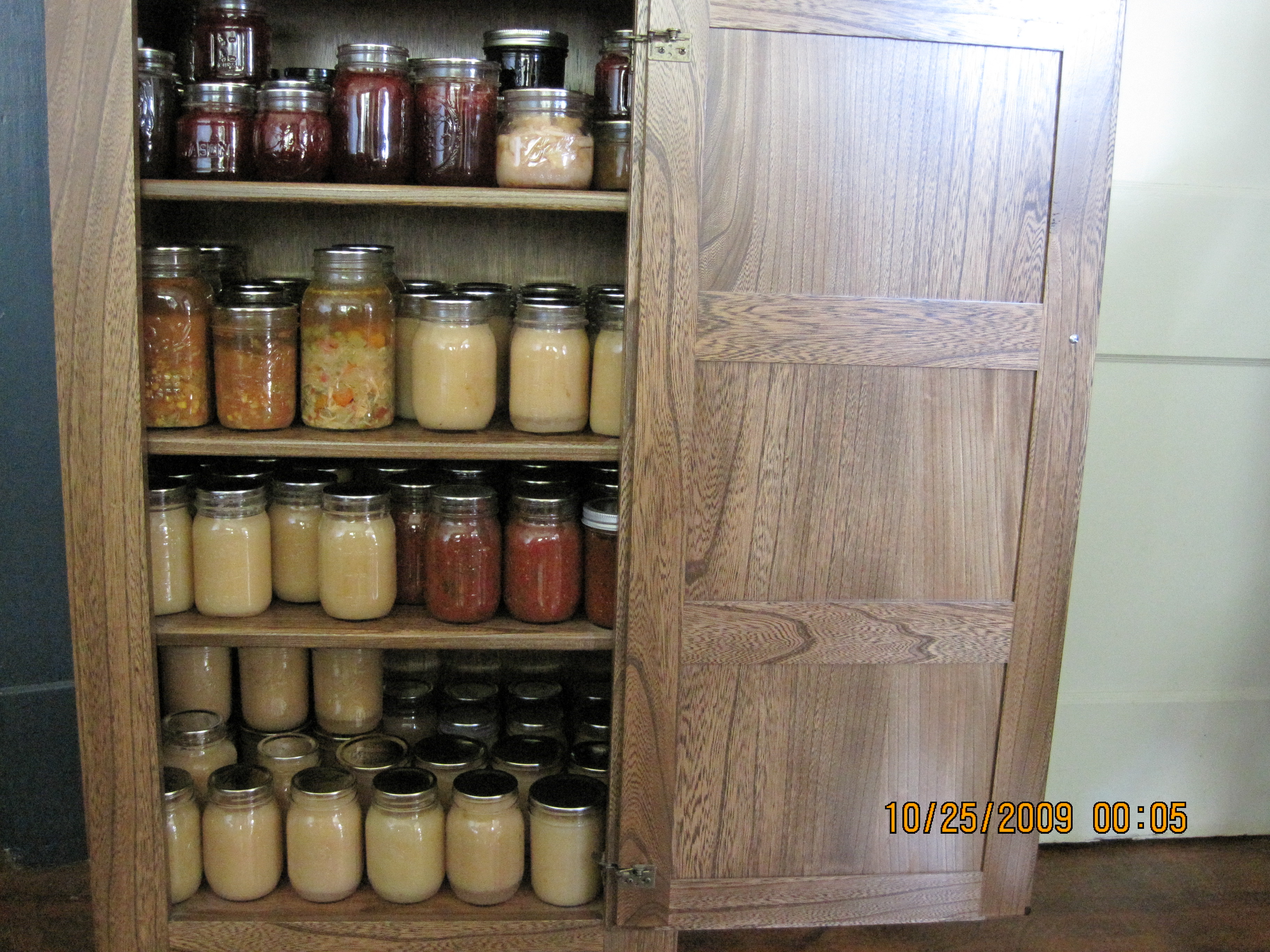
I always loved to find ways to make our homeschooling come alive, and this time of year presented so many opportunities. Science was especially fun during the fall months. Books like The Berenstain Bears' Big Book of Science and Nature and The Year at Maple Hill Farm were favorites during this time of year. Long hikes and visits to the local apple farm made for perfect field trips, and canning and freezing of the produce we grew and harvested created not only an effective science learning experience, but also developed valuable life skills.

Whether this is your favorite season or not, with just a bit of creativity, it is relatively easy to find opportunities enrich your Science studies. If you're not currently using a formal Science curriculum, check out Sonlight's Explorations in Science mini-programs. They are a great way to use hands-on activities to introduce your children to the world around them. But if curriculum materials aren't currently in your budget, learn to look for ways to utilize the current season to spice up your studies.

Still on the journey ...
~Judy Wnuk
Sonlight Customer Champion

Share this post via email


Submit
Tagged , , | Leave a comment

Five Ways to Recover from a Bad Homeschool Day

Share this post via email


Submit

We don't like to talk about our bad days. It's not uplifting. We see all too clearly how desperately we need grace. Bad days poke at our insecurities. But bad days there are. Here are five ways to recover from a bad day of homeschooling.

Defeated

1. Laugh
One of the best ways to rebound from a bad day is to find the humor in it. We may never giggle about certain situations, but Jane's photo about how some homeschooling days are made me smile. It's rarely fun or funny in the moment, but it may be hilarious in the light and mercies of a new morning.

2. Seek Forgiveness and Forgive
When I lose my cool or say something I shouldn't, I find I want to stay there. I sulk for two reasons: 1. If I let it go, it reminds me that I should have done that in the first place, and 2. I have to ask for forgiveness. I hate that part. It knocks my pride and is awkwardly uncomfortable. But it's also the best way to resolve conflict. It gives us opportunities to reconnect with the people we've wronged.

By the same token, if one of your children wronged you, forgive them. Forgiveness lets us move on. Don't let bitterness ruin another day. As one who is still learning to forgive, I know how this can be hard.

3. Take Advantage of Your Homeschool's Flexibility
In other words: Take a break. You control your schedule so if a subject has you pinned to the floor, just stop. Don't do it today. Pick it up again tomorrow... or next week. You can't do this forever, but walking away for a spell can work wonders. Some days require that you go outside and play.

4. Look to the Future
Your kids will not remember any of this.

That's good news. If they learn, from you, how to forgive and move on (see #2), they won't bother to keep memories of the bad days. In fact, they're not likely to remember most of the details you teach them. This initially feels disheartening! But one of my high school teachers reminded me that the big ideas, life lessons, and habits of thought are far more important than all the facts and figures I would forget from his class.

Today, I don't think I remember a single detail he taught me. But I'm absolutely better for his teaching.

The daily lessons aren't nearly as important as how your children develop. There will be gaps in their education. But if they have learned to love learning and are growing into the person God wants them to be, the meltdown over spelling words snaps into perspective.

5. Don't Believe the Lies
It's easy to get burdened by a bad homeschool day because we believe things about homeschooling that simply aren't true. Take a moment and revisit the five myths homeschool moms believe. We know these are myths, but the false messages can still creep into our minds. It's good to be reminded of the truth.

How do you recover from a bad day of homeschooling?

 ~Luke Holzmann
Filmmaker, Writer, Guardian

Share this post via email


Submit
Tagged , , , | 5 Comments

Preschool Fun

Share this post via email


Submit

This fall I'm teaching a preschool class at our homeschool co-op. When I volunteered for this class I had fond notions of eight cute little faces gathering around to listen to me read classic favorite storybooks about Curious George and Peter Rabbit and Little Bear. What I hadn't taken into account is that the preschool class includes both 3-year-olds and 4-year-olds... and some of those 3-year-olds are very young 3-year-olds. Which means their attention spans are pretty much nil.

The class has turned out to be more of a challenge than I anticipated, but like a grandma, I just have them for an hour, and then they go home with their mommies. I'm enjoying coming up with a wide variety of learning activities for the class, gleaning some age-appropriate developmental activities from our Fiction, Fairy Tales and Fun Parent's Companion. I never know what will go over well, and what won't. I'm also finding that it varies day-to-day, definitely keeping me on my toes!

This experience reminds me of a question homeschool mothers often ask me: "What can I do with my toddler while I'm trying to teach the school-age children?"

My favorite response: "School in a bag!"

You'll need a nice sturdy box (the kind that copier paper comes in is a great size) and several gallon-size zipper bags. Fill each bag with materials for one activity, and then put your bags in the box. Save this box only for during "school time."

Some of my favorite ideas:

  • A handful of pipe cleaners and some chunky beads or buttons… or if your little one still has a tendency to put things in his mouth, provide a handful of Cheerios or Fruit Loops!
  • A small cookie sheet with some alphabet or picture magnets
  • Touch-and-feel or lift-the-flap books
  • Preschool-style jigsaw puzzles
  • Inexpensive stickers from the dollar store or just colored dots from an office supply store and a spiral notebook to stick them in.
  • Play-dough (It's easy to make your own!)
  • Blunt scissors with scraps of construction paper
  • Extra-large crayons with a coloring sheet

The possibilities are endless. You'll probably want to add new bags from time-to-time, and "retire" some for awhile to bring out again later.

Plop the Little Guy in his high chair with the tray and give him the contents of one bag to play with while you sit at the table and teach your older children. (Note: Take the activity out of the plastic bag before you give it to your child. The bags are just for storage, not to play with.) The high chair helps restrain him and gives him a nice play surface. When he gets bored trade bags with him. If he has a tendency to go through them too fast, set a timer for whatever length of time seems reasonable to you and tell him he gets to trade when the timer goes off. You should have enough bags in your box to keep him occupied for an hour or so by rotating bags with him.

Have fun with your sweet little one! These years go by very fast!

Enjoying the adventure,
~Karla Cook
Lifelong Learner

Share this post via email


Submit
Tagged , , , , , | 2 Comments

Debunking the Bunker Mentality

Share this post via email


Submit

One complaint leveled against homeschoolers is that we shelter our children, afraid (or unwilling) to expose them to things of this world. The reality is that sheltering children can be a very good thing. But there are times when it is not so good. The nudge to hide away from lies and bad ideas is subtly promoted throughout the homeschool world. The outcome of such an approach could be called "the bunker mentality." But rather than build a fortress to stand against an onslaught of error, I'd prefer to prepare children to step out into the fray, ready to provide answers and meet people where they are.

Bunker
Out of the Bunker

We sit at my kitchen table. He is a brilliant young man who has rejected Christianity. The only way he could accept a god, he tells me, is if "god" was everything. It makes sense from where he's coming from, but leads to a rather odd, meaningless version of pantheism. We're talking about religion, and he makes some crack about people who reject evolution.

"Hang on," I interject. "Before we go on to say how ignorant Young Earth Creationists are, let's talk about evolution. It really bothers me how no one bothers to define that term. Are we talking about descent with modification, common descent, or abiogenesis?"

He's unaware of any such distinction within the theory. So we talk about it. And I learn that matter/anti-matter are often observed popping in and out of existence, pointing to the possibility that stuff--energy/matter--can be created out of nothing. (I can't find any clear links on this subject, so if you've read anything about this that an average person like me could understand, please share!)

Super cool.

Also interesting, he's no longer interested in talking about stupid religious people.

Growing up with Sonlight, I learned that it was good to question and discuss and find answers--even if the answers are incomplete. My faith is grounded in a belief that truth will win out and I don't have to fear wrestling with ideas. This makes science--good science--an ally. This makes questions opportunities to discover (and share) truth. This opens the world to be a place to learn more about God. And it allows me to be an active ambassador of Christ, not a fearful individual holed up in a bunker somewhere. And with a strong desire to share the love and truth of Christ, being able to step outside a Christian "bubble" is essential.

My parents helped me develop this desire to reach out instead of hunker down.

And you can do the same with your kids.

 ~Luke Holzmann
Filmmaker, Writer, Guardian

P.S. Interested in exploring a homeschool curriculum that empowers you to have meaningful discussions with your children and prepare them to thrive in the world they will encounter? Check out Sonlight's homeschool curriculum.

Share this post via email


Submit
Tagged , , , , , | 4 Comments