Why Life-Long Learning is a Natural Part of Exploration

Share this post via email


Submit

Every new task you do will require you to learn something. Even flushing a toilet. Years ago, as a young man, I spent a week in the UK. We were in a bed and breakfast and the toilet had an elevated tank. There was no handle. No chain. There was a little foot peddle that seemed for #1, but when I had to go #2, I was at a loss. There was no way to flush the thing! I carefully made a search for a button, lever, switch, or hidden knob. I found none.

I finally had to ask.

Turns out you had to grab the pipe going from the tank to the bowl and pull down. I never would have expected that. Years after being potty trained, I still had to be shown how to flush the foreign toilet. Granted, part of that problem was a design and signage issue, but it demonstrates how much learning we so often take for granted because we can figure it out so quickly.

As we encounter new things, we have opportunities to learn.

I'm working on learning how to help split test our website. I'd love to make the site better. And the idea of a split test is you can use visitor behavior to determine what is most helpful. But I've had a nagging suspicion that our results aren't as certain as they could be. So I started a new test: I'm currently seeing how a page performs against itself. I'm checking the results of showing different people the exact same page.

Thus far, the outcome is impressive.

Identical-Split-Test
A/A Split Test: A is preforming 118% better than A

Naturally, with so little data, I expect a regression toward the mean. Overtime, these two should drift closer together. [But we must not assume they will ever balance each other; such an assumption is based on the gambler's fallacy.] But I think there may be more going on here than is covered in the articles I've read about A/B Testing. It turns out, I learned today, that scientific studies tend to lose their ability to be proven over time.

What?

I'm so shocked, I tell my wife. "Oh, you mean that thing they talked about on RadioLab?" she asks, as if I'd just told her the sky appears blue. Once again, I'm late to the party of knowledge.

The good news is that I'm still learning.

It is natural to learn when we encounter new activities, ideas, or questions. But how do we ensure we keep bumping into new things?

  1. Read: Books are a great way to expand your world.
  2. Take a class: Online, at church, or as curriculum, it's easy to build on what others have created.
  3. Ask questions: I noticed 1 Kings 8:9 for the first time on Sunday and wondered why the Ark didn't have more stuff in it. I still don't know. But the question is pushing me to find an answer! Don't let pride rob you of learning.
  4. Try something new: Whether it's building a website, knitting a sweater, or baking something tasty, there's plenty out there to stretch you. (I hear Pinterest is a popular source of inspiration, if not discouragement.)
  5. Travel: I'm not just talking internationally where you'll encounter strange restrooms. When I visit a friend at their church, I often come away with a new appreciation for who God is in light of the difference in that congregation's worship.

How do you like learning new things?

 ~Luke Holzmann
Filmmaker, Writer, Guardian

Share this post via email


Submit
Tagged , , , , | 2 Comments

Maybe we can read another chapter tonight?

Share this post via email


Submit

We've had "our German" for a month now. She's adjusting to life in America and with us. School continues to be in flux as we all try to figure out what will be best for her. This week, at our exhorting, she asked her History teacher if she could read a different book. They had been given an assignment to select from a list of historical fiction options, and my cousin had opted for the one with her mother's name in the title.

The book proved to be disappointingly terrible, despite being on a certain TV celebrity's book club list. We flipped through the Sonlight catalog and came up with three superior options. Her teacher agreed and I bought a second copy of By the Great Horn Spoon so my cousin could follow along while I read it aloud.

When we had tried to read the original work, we all dreaded the experience. It was a chore that we dutifully waded through. I would rather have read from the antiquated phone book that shows up now and again on our doorstep. And my cousin was miserable. She struggled to keep track of the shifting perspectives and timelines scattered about the pages. The story was dreadfully dull and pointlessly depressing.

Contrast that experience with the one involving our new book.

We read two chapters before youth group and, on the drive home, my cousin asked casually, "Maybe we can read another chapter tonight?"

Chapter 5 waits impatiently for when I get home from work today.

My wife, who has not yet had the pleasure of reading this particular book, is also loving it. She often bursts into giggles as each new character and event saunters into view.

And that, my friend, is what is so spectacularly brilliant about good literature: No matter if you're a German kid still unsure of your English, new to the tale, or revisiting an old favorite, great stories urge you to keep reading. And we happily oblige!

I think it's also important to remember that listening to a great book enables us to learn things we couldn't pick up on our own. This is my first time reading By the Great Horn Spoon because my mom read it to me as a kid. I did not yet have the ability to read well enough when I was twelve. Same with my cousin. I'm sure she reads just fine in German, but English is a different story. So I read, she listens, and we all talk about it as we go.

My cousin loves the book she's currently "reading" for school.


By the Great Horn Spoon

I wish more History and English classrooms were filled with the literature that spills off the bookcases of Sonlighters around the world.

~Luke Holzmann
Filmmaker, Writer, Empty Nester

Share this post via email


Submit
Tagged , , , | 2 Comments

Why Are People Creative?

Share this post via email


Submit

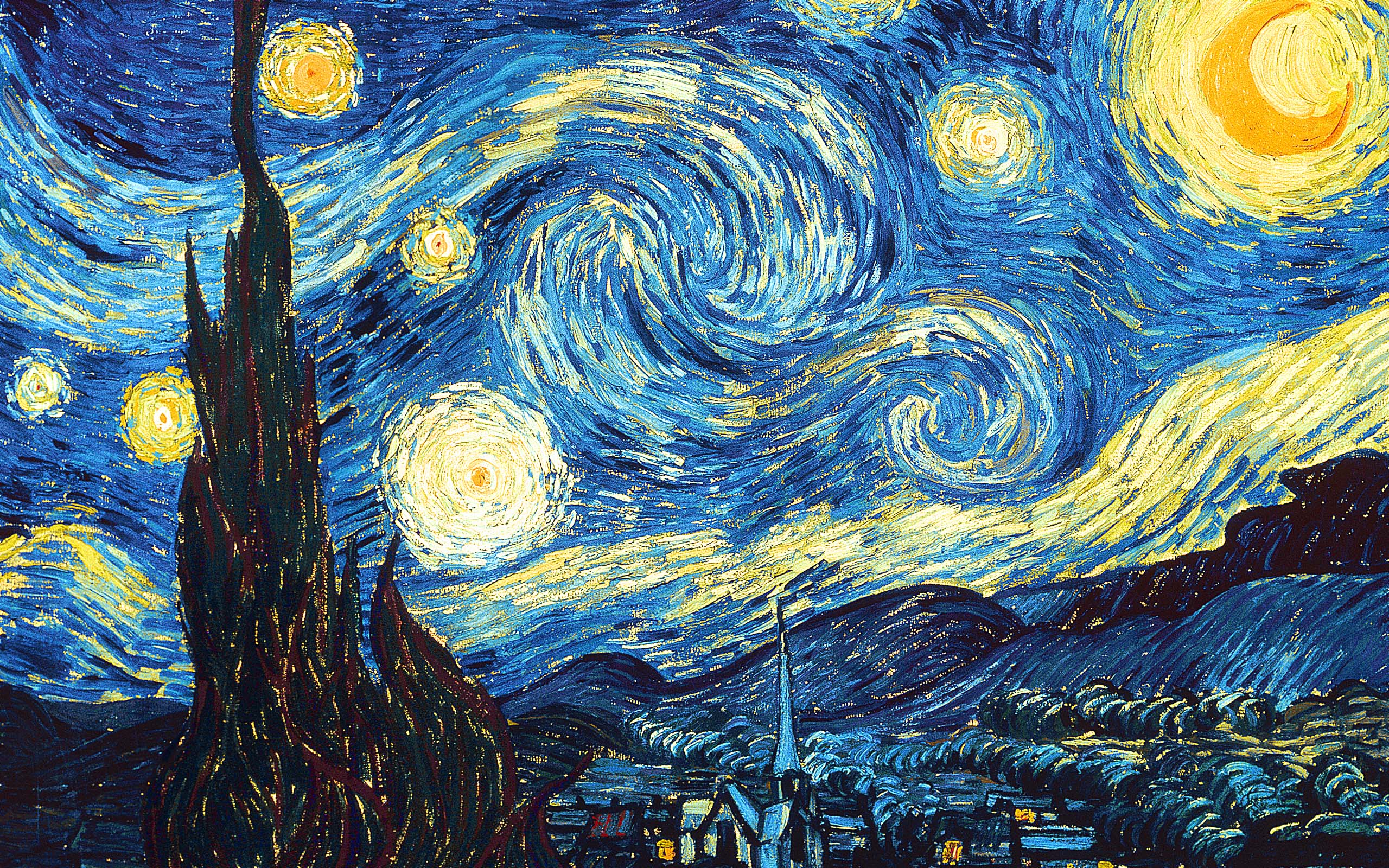
Starry NightWe appreciate creativity when we encounter it in music, art, literature, film, and other areas of life. But why are people creative? The answer from a Christian perspective is rooted in what theologians call the imago Dei--the image of God.

In short, biblically speaking human beings are made in God's image (Genesis 1:26-27; 5:1; James 3:9). This image includes, for instance, human creativity, intellect, and morality. Consequently, the creative impulse is inherent within human nature.

Even if we don't personally see ourselves as particularly creative individuals, the spark of creativity remains, perhaps only needing a nudge in the right direction or a matching of talents with a particular calling. This does not mean that everyone is called to manifest creativity in the fine arts as a way of life, but creativity can serve us in any subject area or career we pursue.

We may pause here and ask, "To what extent does God's image make itself known in human beings? Is the image of God in us destroyed as a result of the fall or is it merely impaired or marred and, if so, to what degree?" These are deep questions theologians grapple with, resulting in differing solutions.

Some are supportive of common grace, which holds that a certain measure of God's grace is extended to all of humanity. Given this viewpoint, the fact that we are all created in God's image, combined with a dose of common grace, results in the potential for creative greatness, beauty, and flourishing in human endeavors from art to literature to philosophy to science and more.

Applied to human creativity it also means that we can learn much from various sources. It does not mean that artistic endeavors or works override biblical revelation, but it does mean that they can contribute to human understanding and even to the glory of God.

How are these ideas practically relevant? They can help us to appreciate wonderful artistry, wherever it is found. Rather than retreating into our own Christian subculture, entrenching ourselves, we can instead intelligently engage and appreciate a variety of ideas, noting areas of great value, but also critiquing ideas that may be creative and intellectually rigorous, yet lacking overall coherence or soundness.

In addition, understanding the image of God and its relevance to life can help us better understand ourselves and, in the case of education, our children. For example, we can read great literature and glean insights from it without undue fear or paranoia. Finally, having an understanding of the image of God can help us better understand and engage the world around us.

A word of caution is in order, however. Although human beings are made in God's image, we are fallen beings, which means that there is also an element of rebelliousness within us--a twisting of our nature, so to speak. This can lead to warped forms of creativity, wherein goodness is spoiled or disfigured.

The broader point, though, is that the image of God in us results in great potential. We have the capacity to create, to reason, and, by God's grace, to flourish.

Robert Velarde
Author/Educator/Philosopher

Share this post via email


Submit
Tagged , , , , , , , | Leave a comment

You Feeling Totally Paralyzed?

Share this post via email


Submit

I hear her bang her computer mouse repeatedly against the desk. My wife is usually an incredibly patient and relaxed person, but every now and again she'll snap. Not to worry, she still has nothing on me in the lose-it department. But as much as she loves computer/video games, they can frustrate her to the point of irrationality. "This stupid level!" she yells.

"Why don't you take a break?" I offer, because I'm all about fixing things.

"I can't," she wails at me as her eyes snap back to the computer screen and the source of her needless angst.

'Gaming is supposed to be fun,' I tell myself. I once made the mistake of reminding her of that fact.

It's so easy to see it in others. "Just take a break. Life will be so much better." And, for whatever the psychological reason, I can't seem to see the obvious in my own life. There was that time I refused to stop working on the shelf I was building. And all those times I did not to listen to my wife who gently tried to encourage me to stop beating my head against my film projects. Of course I've had my own needless repetitions in a game that long ago ceased to be enjoyable. Then there's the school work, the chores, and the arguments that I should have walked away from to come back to later. But I didn't.

Try-Again-Later
Try Again Later

Why do we get totally paralyzed with this kind of stuff? I'm pretty sure I do it because to "give up" would be to fail. And fail I must not.

Such thinking ignores the fact that often we need fresh perspective and a chance to look at things clearly again. My wife is all too familiar with the blind rage that seeps into the corners of my eyes when a task is paralyzing me.

Please, don't be like me.

If something has you stuck, walk away for a bit. Find something that will help relax you.

I appreciate Robin's post that provides a picture of chickens to help us recover from scary math equations. There are some things that bring us back to feeling paralyzed even years later. Such feelings run counter to a life-long love of learning. So purpose to step back for a while. Before you are unable to break away, decide to take a break.

Regaining perspective by cooling off and watching some chickens is not slacking.

It's a good thing. And something I should do more often than I'd like to admit.

Do you find yourself "pressing on" long after you should have? What helps you remember to come back to something that has you paralyzed with frustration? I'd sure appreciate your tips!

 ~Luke Holzmann
Filmmaker, Writer, Guardian

Share this post via email


Submit
Tagged , , , | 2 Comments

Prioritize Learning Over Performance

Share this post via email


Submit

The biggest flaw within the public education system, if I had to narrow it down to one thing, would be the natural focus on performance over learning. In school, how much you learn doesn't really matter. What matters is that you succeed in class. And you succeed by doing what is expected of you, regurgitating on a test what you've been told, and participating in discussions and projects. Your grade, and therefore ultimately, graduation, depends on what you can reproduce, not what you have learned.

This actually makes sense.

  1. If I to tell you that it is important to look both ways before your cross the street, I would expect you be able to demonstrate that you do, indeed, check for vehicles before putting your life on the line in a crosswalk. If you had not known about street safety--as most children initially do not--you would have learned something. Should you fail to act on what I had told you, I would reprimand you and reiterate the lesson. Learning a lesson should carry with it some kind of result.
  2. To graduate, you must meet certain proficiencies. If you are not yet able to perform certain tasks, what difference does it make how much you have learned? By age two, kids have learned an incredible amount... but I still wouldn't let them drive my car.
  3. The amount of learning, then, is a rather useless metric... even if it were possible to get such a measurement. When it comes to classwork, you just need to get it done. The kids who do best in school are those who already know the material. Those who are still learning fall behind.

Despite the logical foundation for this Achilles's Heel to mass education, there is considerable danger to this kind of thinking. In fact, it can hold us back from discovering new things:

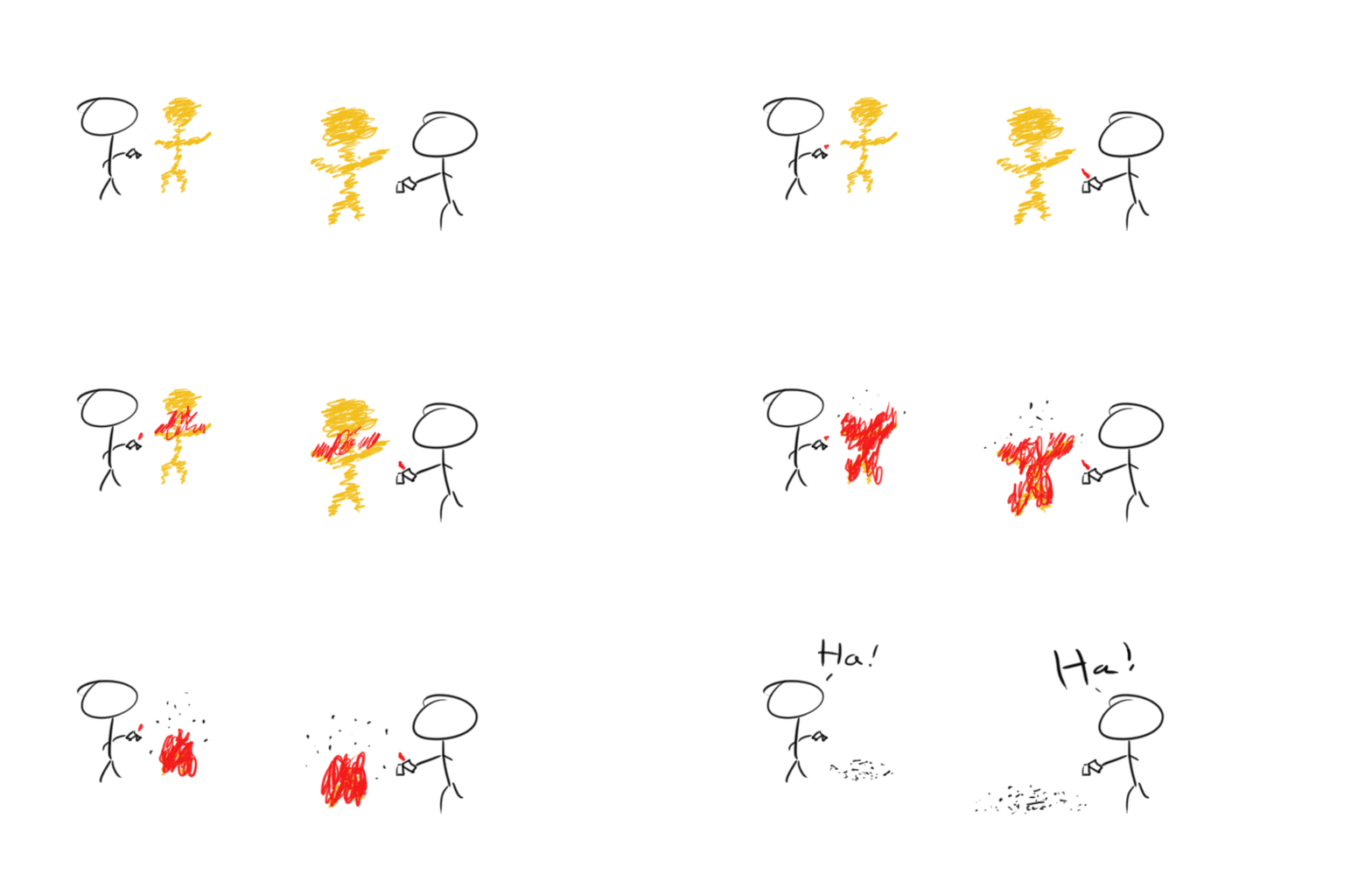
Hat Tip
Daphne Gray-Grant

This makes so much sense. And it explains why some of the most brilliant people throughout history have been frustrated and bored in school.

A formal education is incredibly important, but it is best if it is built around learning. This means you have time to figure something out. It means you do things until you master them. It means the ultimate goal is understanding, not recall. And it means that a real education is not testable while it's happening. All you can do is sit back and see the results at the end. Indeed, testing while learning is a terrible idea because we don't know it yet.

With a classroom, if a student fails a test, that's it. The student has failed.

With homeschooling, if your student fails a test, that's just the beginning. The student has not yet learned. One of the amazing benefits of educating at home is that we are able to prioritize learning over performance.

 ~Luke Holzmann
Filmmaker, Writer, Guardian
Share this post via email


Submit
Tagged , , , | 2 Comments

Sonlight on the inside

Share this post via email


Submit

I pray that Sonlight as a company never settles for the status quo. For one, we strive to be an excellent place to work. We also aim to do business in an upright manner with all our vendors, contractors and customers. That's why we wrote about the lemonade stand dilemma and our stewardship practices.


What I see when I enter the Sonlight building – a reminder of who is in charge and whom I serve.

When it comes to how we treat employees and how we view work, we believe:

  1. People matter. That seems obvious, right? But I'm not convinced every company actually believes this. Our conviction comes from our Christian belief that people are created by God and have inherent value and significance. In other words, our employees are important. This is why we seek to provide a comfortable workplace. When we built our building, we put in many windows for natural lighting. We put mats in the warehouse so our employees don't get backaches. We expect our managers to treat employees with respect and dignity. We strive to listen and will implement good suggestions, no matter who offers them.
  2. A worker is worthy of his hire. Some homeschool companies ask their employees to work as a ministry, for very little pay. But we believe that it is a Scriptural principle to pay a worker his or her due. And so we pay our employees very competitively. We provide profit sharing, give bonuses when deserved, and generally seek to take care of our hard-working employees.
  3. Our money is not our own. Sonlight's money is not ours to use however we wish. Instead, we are stewards and caretakers of it. Every time I meet with our CFO to discuss money matters, I pray that we would be as careful as we can be with the money and resources entrusted to us. Our significant financial support of Christian missions is just one aspect of this stewardship.
  4. Work is not a four-letter word. Adam and Eve worked in the Garden of Eden before the Fall. I believe that one day we are going to work in heaven. I believe work is a good thing, but that it's not always easy because of the Fall. Work can be challenging, stressful and hard. But since it's something we were created to do, we find inherent satisfaction in a job well done.
  5. Balance in life is important. Work is surely important, but it is not the only important thing. I base that on the fact that the Bible says there are six days we should work and the seventh we should rest. We discourage employees from putting in many extra hours. We want them to go home at the end of the week and enjoy their families. I often ask employees when their next vacation is, and encourage them to take a break.
  6. Work hard. God sees what I do, and I want to make sure I work as carefully and as well as I can. I pray the same is true for all our employees.

How do you feel about work? Even though homeschooling doesn't earn a paycheck, please know that your hard work will pay dividends for years to come.

In the end, everything we do here at Sonlight is for the sake of serving God and helping you. I count it a privilege to come alongside you as you go about the business of raising and educating your children.

Blessings,
Sarita

Share this post via email


Submit
Tagged , , , | 1 Comment

Our Apple Tradition...

Share this post via email


Submit
A perfect Day for making Applesauce

A perfect Day for making Applesauce

This past Saturday dawned with mist rising from the Kentucky River over the Palisades. It was one of those memorable mornings when you just want to stand outside with a cup of coffee and watch the day begin.

But, I don't have time for that. Today, is Applesauce Day, a family holiday garnering as much participation as any other holiday. Today, we make applesauce. As I set up the work stations and haul the bushels and bushels of apples out of the basement and onto the deck to be washed, I can't help thinking about how important family traditions are.

The "Boiler Room" set up for cooking and making the apples into sauce.

The "Boiler Room" set up for cooking and making the apples into sauce.

My mother taught my sisters and I to can vegetables and fruits as soon as we were old enough to help. Then, when I moved to Kentucky, my mom would bring Michigan apples to me every fall and she and I, my dad and any kids who were old enough would pitch in to make applesauce, canning what we had made. I looked forward to it every fall. I have always loved the smell of cooking apples and the satisfaction of seeing all those jars on my shelves, ready with good food for my children.

After mom died I didn't have the heart to carry on by myself. It made me sad. But, my husband said, "Jill. You are the mom now and you need to carry on the tradition. Maybe ask Jenny to help."

Applesauce 13, Jenny in kitchen

My good friend Jenny manning the upstairs kitchen where we have two canners going full time in order to process all the filled jars of sauce.

So, I called my good friend Jenny, who had a two and a half year old and a baby, and we set the date. My daughter was a great help and with the husbands managing the kids, we had a great day. That was 13 years ago.

Friend Bethel, in charge of the "Boiler Room" where the apples are cooked and sauced.

Friend Bethel, in charge of the "Boiler Room" where the apples are cooked and sauced.

Every year since, Jenny and I have had  Applesauce Day. They went on to have three more children, my older children have little ones now and we have added another young family and a couple of young couples to our applesauce group. It is a day of fun, work, swapping stories, laughing, older kids toting around little ones and of course apples.

At one point on Saturday I went by the picnic table where three men were cutting up apples. I heard them talking about Tesla coils and it made my smile. So that's what guys talk about on Applesauce Day. I never would have guessed.

It is part of what makes us a unique family. My kids talk about Applesauce Day as if it were Christmas. It is a time to connect and to work together. It is a tribute to my mom and to all the women in my family who have come before.

Some of the guys...cutting apples and discussing Kenji's Tesla generator.

Some of the guys...cutting apples and discussing Kenji's Tesla generator.

What do you like to do? What gives you satisfaction? Is it something you could do on a regular basis and make into a tradition---passing your love for it on to the next generation, and the generation after that?

This year we canned 121 pints and 65 quarts of applesauce. The 16 adults and 11 children ate nearly two gallons of sauce, along with chili, potato soup and whole wheat cinnamon chip bread.

Half way through the day. The literal fruit of our labors.

Half way through the day. The literal fruit of our labors.

Dinner time found my husband making a campfire and roasting hot dogs, followed by s'mores. I had to laugh as one of Jenny's children said, "Will there be smore's?" And she said, "It is Aunt Jill and Uncle Bob's farm, what do you think? Of course there will be s'mores."

I guess that is a tradition all by itself.

Take care,   Jill

Simple satisfaction of a job well done. I love my jelly cupboard.

Simple satisfaction of a job well done. I love my jelly cupboard.

If you would like to talk to other homeschooling moms about home and  health issues, including food preparation and storage, check out the Home and Health Forum on the Sonlighter Club Forums. I cannot believe how much I have learned from this forum.

Sonlight also has some great apple related books which we always love to read:


Share this post via email


Submit
Tagged , , , , , , | Leave a comment