Why Sonlight shows students that the world isn't perfect

Share this post via email


Submit

Sonlight does not pretend the world is perfect. We always remain rooted in the hope of Christ, but we don't shy away from books and curriculum that deal with tough situations.

Amidst our more light-hearted book choices, Sonlight's curriculum also sprinkles in examples of children who face tough times and persevere. You'll read hope-filled stories of families who lived through difficult periods of history (such as war, drought or oppressive governments) but stuck together and made it through. Your children will find inspiration in characters who stepped up in hard times and made a difference in their communities.

The stories we use present a real look at the world, but the characters never crumble in the end (except for a few literary classics in the upper high school levels, such as The Grapes of Wrath in Core 400). Sonlight books and programs instead show that trials are a normal part of life, and that with God's help we face them, maintain hope, and grow.


Brock, Tucker and Holly P enjoy a Sonlight adventure of perseverance and triumph in Medieval Europe

Children should be optimistic about life, but they shouldn't think it will be all rosy and light. Even in their appropriately sheltered worlds right now, things aren't perfect. They face disappointments: when a sibling breaks a prized toy, when the flu keeps them from a friend's birthday party, when they don't make the baseball team, or when they don't get their own way. Unfortunately, children can face even bigger disappointments: when a best friend moves away or a beloved grandparent passes on.

If children expect life to be easy and carefree, they aren't prepared for when things go wrong. When a truly tough situation comes along – whether now or in college and beyond – they can think God has abandoned them. They can think they don't know how to handle the situation.

If we help children see that the world is tough and they can be tough too, we can actually empower them. When hard times come, we can help them to think "You know what, I'll get through this. Because kids in stories get through tough spots as well."

Fortunately, our imperfect world is not the end of the story. God is working things toward an end point where he will redeem all his people and we will live in harmony in the New Jerusalem. Oh, how I look forward to that day!

For now, the world can be a beautiful and tough place. I pray that Sonlight children will grow up with their hope and trust in Jesus Christ. I pray they see that people need a Savior and that they will share their hope with others. May our children make a difference in this world that God loves so dearly.

Blessings,
Sarita

P.S. For a longer article related to this topic, I highly recommend "Why Sonlight Uses Certain Books Some Homeschoolers Won't Touch."

Share this post via email


Submit
Tagged , , | 1 Comment

Graduation: Current Reflections from High School

Share this post via email


Submit

She barely graduated, finishing an overdue five page paper and retaking four tests two days before the ceremony. "I'm so glad to be done with stupid high school," she tells me. Her pale eyes flash with bitterness. "I hated it."

Mortarboard
Graduation Cap

I feel like I had a good high school experience. But that, apparently, is not the norm. Again and again this graduation season I hear the refrain: "High school was terrible. I'm so glad to be out." Not unlike prison.

Ironically, in these times of catharsis, no one mentions the "socialization" so often dangled before homeschoolers like the proverbial carrot on a stick. Prom, sports, friends--any joy in those things have been overshadowed by something else. [Of course, I hear plenty of "horror stories" about all the potentially positive things as well.] It's not the teachers. These kids love most of their instructors. It's not learning. They wax eloquent about the knowledge they absorbed. It's not even the social structure--though, the terrible has been normalized. What kids tell me today is that high school was a pointless, benefit-less game filled with petty frustrations and very real hurts.

I was always glad to be done with my school year while homeschooling. There's a natural elation at finishing your work and taking a well-earned vacation. But even as I transitioned into a public high school, I did it because of the opportunities to grow in ministry. I would have stayed home if I was more interested in academics at that point.

Your students may not be close to high school yet, but if it's been on your mind, consider this: The high school graduates I've been chatting with agree that those four years were not how they wish they'd been taught.

With Sonlight, your children will be able to go from preschool through high school using a program we guarantee they love. I expect you are likely pretty excited about finishing your school year, but if Box Day stories are any indication, your students loved to learn, and you loved to teach.

Have you heard from any recent high school graduates? Is it just my circle of friends, or is this gasping relief something you have witnessed as well?

 ~Luke Holzmann
Filmmaker, Writer, Empty Nester
Share this post via email


Submit
Tagged , , , , | Leave a comment

Remembering...

Share this post via email


Submit

My mother tells me that when she was a little girl on "Decoration Day" it was the tradition for families in their community to go to the local cemetery to freshen up the graves of their loved ones. I have always been fascinated by cemeteries, especially old ones. It is interesting to me to read the memorial stones and think about those who have gone before.

Several years ago I discovered the online virtual cemetery at findagrave.com. Just for fun I enjoy researching my family's genealogy. I have appreciated being able to add photos of some of my ancestors' graves to my personal database. Two graves in particular are my favorites.

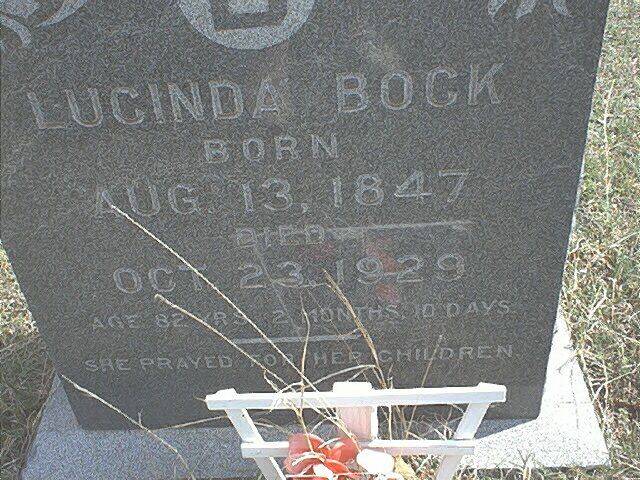
My great-great-great grandmother was born in 1847 and died in 1929. Her headstone lists her name, dates of birth and death, age, and then the simple inscription:

SHE PRAYED FOR HER CHILDREN.

I love that. No one alive ever knew her personally, yet I have to believe that her prayers for her children have continued on down through the generations.

4 generations

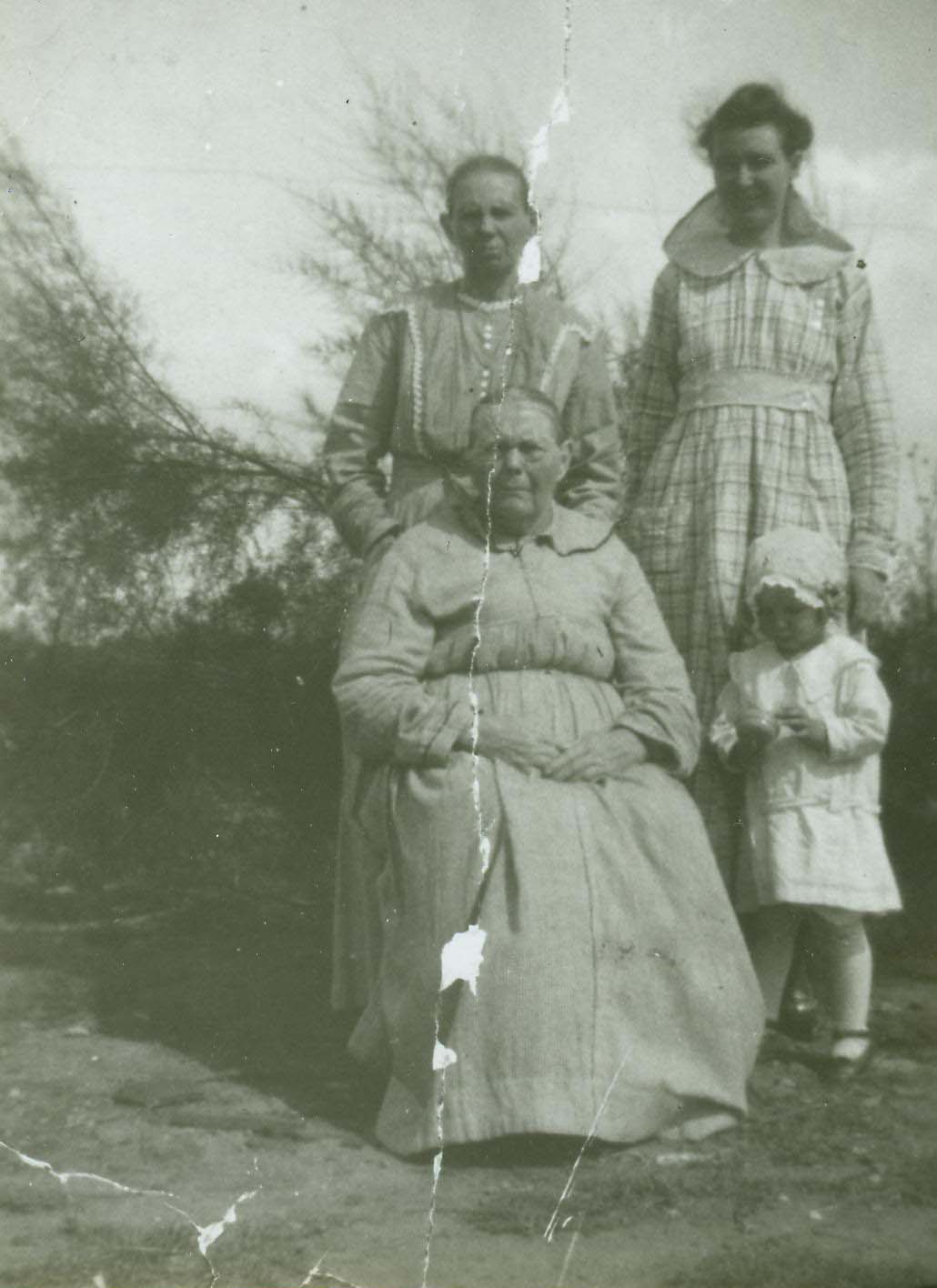
A 4-generation picture taken in 1919.

Another inspiring headstone that I came across dates back to the 1600s. Mary Sheafe is possibly my 10x-great-grandmother. (It's hard to prove lineage that far back.) Her epitaph reads:

MARY SHEAFE (THE WIFE OF THOMAS SHEAFE WHO LIVED
TOGEATHER NEERE XLV YEARES & HAD ISSVE BETWEEN THEM
IX SONS, VI DAUGHTERS). SHE, A GRAVE & CHARITABLE MATRON
LIVED LXXIII YEARES OF AGE. NOVEMBER 1609.

I wonder how I'll be remembered? I doubt anyone would consider me to be a "grave and charitable matron." (Well, hopefully "charitable," but never "grave.") I'd love to be remembered as being a praying mother, though.

Enjoying the adventure,
~Karla Cook
Lifelong Learner

Share this post via email


Submit
Tagged , | Leave a comment

Why Is Homeschooling So Efficient?

Share this post via email


Submit

One of our Facebook friends recently shared that her son finished the first day of Core A in 45 minutes. Most schools would barely have made it past roll call and an "ice breaker" game in that time. This radical disparity in efficiency is one reason why I find state requirements to spend a certain number of hours "in school" so strange. So how do homeschoolers accomplish so much in so little time?

Here are six things not available to most teachers that benefit you as a homeschooler:

  1. You can get to work right away. When you're ready to start school, you just start. You don't have to wait for passing periods or a particular time. You just get going.
  2. You don't have to wait for others. If your student "gets it" right away, you can move on. In class, you may have to wait while the teacher explains an idea again for someone who didn't catch it the first time. Conversely, if you need extra time to understand an idea, you don't have to hold up 30 other kids while you wrestle with the concept.
  3. "Containment" is not one of your goals. Paul Graham states that "Officially the purpose of schools is to teach kids. In fact their primary purpose is to keep kids locked up in one place for a big chunk of the day so adults can get things done." The primary purpose of homeschooling is to educate our kids. After we'd done some of that each day, my parents let me run free.
  4. You can make it fit your needs. Is your child having a meltdown? Are you about to have one? You can take a break and come back to this later. You can read school books as bedtime stories--of the many reasons Sonlight's literature-based approach to homeschooling is such a beautiful thing. You don't always have to just try to push through.
  5. You love learning and teaching. Most of the teachers I know absolutely love teaching. They love their students. But the students, stuck in an inefficient and often uninspiring scenario, may not be so energized. And your children won't be all the time either. But with Sonlight, we guarantee that you will love to teach and your kids will love to learn. As a homeschooler, you can pick the resources that work for your family.
  6. You don't have to lecture. Homeschooling demonstrates that lectures are not always the most effective way to teach people stuff. Lectures have their place and can be interesting, but by homeschooling you can take advantage of highly efficient and effective teaching models.

Put simply, homeschooling is efficient because of the low student to teacher ratio and freedom from forces that have interests other than educating children. That's how homeschooling works! Homeschooling is, I think, an example of what Seth Godin calls appropriate cheating. Homeschooling is not limited the way schools and classrooms are. And we can focus on productivity over being busy.

You may be thinking, 'That's nice, Luke. But you haven't been to my house. I can't seem to motivate my children and we're anything but efficient. I'm often still cajoling my kids to do some work at dinner time!'

I, personally, don't know anything about that <grin>. But I did have a sibling who made it hard on my poor mother <cough>. If you're struggling to get it all done each day, you're not alone. Here are six ways to fit all the subjects into your homeschool day. And Judy has four excellent reminders for when your kids break down. And maybe it's time to consider ways to help your children learn to concentrate.

Do you find homeschooling to be efficient? Or was this last year filled with long days of pulling those proverbial teeth? A little bit of both?

~Luke Holzmann
Filmmaker, Writer, Empty Nester

Share this post via email


Submit
Tagged , , , , | 1 Comment

Pre-school ... just reading?

Share this post via email


Submit

CoreP34I'm sitting in Florida this morning, enjoying the quietness before the busyness of getting another convention off the ground. I'm contemplating all the great families we're going to meet ... parents who are excited, nervous, and eager to begin the journey of homeschooling. But I'm also thinking of the parents that we'll try to encourage to slow down and not stress about growing their children up too fast.

One of the amazing ladies I work with shared an email conversation she had with a young mom a couple weeks  ago. Mom was concerned that her 2 year old would be bored with Sonlight's PreSchool Program because there was no real academics included, just reading and activities. She was worried that her child, who was already identifying colors and numbers, would lose interest quickly. Cathy's response was wonderfully gracious and right on the mark, and she gave me permission to share it with you. I hope you'll be as encouraged as I was when I read it!

It's easy to get caught up in teaching about things (like colors, shapes) and think that will lead to academic success later. We can feel that pressure, especially if we see others studiously drilling their young children. There's that fear that our children will be behind, less capable, less knowledgeable. In reality, many of these things are more easily learned and better understood at a little later age. The greatest preparation and predictor of academic success is a strong, positive relationship with the parent. Lots of reading and simple, enjoyable activities such as found in the early Sonlight years are the best way to forge that strong positive relationship between parent and child. 

Think of it this way, stories are a way to bond with your child, and we generally have stronger memories of hearing favorite stories than we do of learning colors and shapes, even though we all learn shapes and colors at some point. This time reading together builds not only the relationship, but also vocabulary and language skills in an easy, low-pressure way without drilling or workbooks. Language skills are also a huge predictor of future success, and Sonlight is an enjoyable way to do that. 

Information is also best learned "in context". This means that while a child could learn to identify a color by just looking at a sample of it and hearing the name repeatedly, for example, an easier way to learn that color would be if it's important in the context of a story. 

Finally, maturity affects learning. The brain matures in a certain pattern, and information that is presented which the child is not yet able to grasp will cause frustration until the child's brain is ready to learn it. This is much the same as learning to walk. No matter how much you hold your child's hands and help her to walk, she will not walk on her own until her body is ready to do so.

I hope this helps you understand Sonlight's perspective on early learning, and why "just reading and simple activities" is a great approach that addresses the most important factors for enjoying the present and looking forward to future success.

Couldn't have said it better myself!

Still on the journey ...
~Judy Wnuk
Sonlight Customer Champion

Share this post via email


Submit
Tagged , , | 1 Comment

Be kind to yourself

Share this post via email


Submit

Jonelle-SmileAt the end of April I went away for two nights on a women's retreat with my church. It was the first time I'd ever been away from my girls, and, after a day of not having to think about anything, I felt like I'd been gone a week and was so happy to get home.

While I was there, I really felt like the Lord said, "Jonelle, it's time to stop with the negative self talk. If I have called you good enough, who are you to say you otherwise?"

I knew I needed to draw a line in the sand and commit to not putting myself down any more. Especially since college for me, this has been huge. "If I could just lose 10 pounds, I'd be so much better. If only I had better gifts, I could be so much more effective"...(I know I've even mentioned these lines of thinking on the blog, so, this has been a LONG time coming!) It was time to be done. Time to look at myself in the mirror and say, "I'm beautiful. God has created me in His image and if He makes beautiful things, that's good enough for me."

So, I drew that line. I committed that, if God would be with me, we would get through the mountains of lies together and that I would no longer put myself down.

And it's been great.

And by God's grace, I've been able to look kindly on myself and see the beauty God put there.

And then I went bathing suit shopping.

And it was not horrible. It was not completely demoralizing and depressing as it's been in the past. I wasn't able to find one, but I didn't go home in tears. In fact, as I was leaving the store I was able to say, "they just didn't have my size and one that fits my body type. But do I really need to be thinner to be healthy? To fit into their size of swimsuits?"

And immediately what popped into my mind was a statement of what health is from one of my books I'm studying for my homeopathy course: health is freedom from physical, emotional, and mental things that would hold you back from your greatest calling.

I love this statement of health because it doesn't talk about size. It talks about freedom. If I am obsessing about reaching a certain size, that is not freedom. And therefore, it is a form of un-health. If I am physically able to do what I feel called to do, I am, in a sense, healthy. Just because society says I should be thinner, would that really be more healthy for me? To count calories or exercise compulsively (because that's me...), is that really more healthy? I don't think so. Because while my body might be a well oiled machine, my mind and emotions would be focused on decidedly unhealthy things for me.

So, I'm fighting back against what our society says I need to look like to be "healthy" and "beautiful."

In so many ways I am completely content to be countercultural and have no qualms. But, the lies of the enemy have become so ingrained in this aspect of my life, that this is a toughy. I am choosing to be kind to myself. To say, the way you eat is good enough. The way you exercise, and the amount you do, is good enough. The way you look, is not just good enough, it's beautiful.

Would you join me in fighting back? In not putting yourself down? In not saying, when I am different, then I will have worth and value. Lies. A bunch of lies from the one who comes to steal, kill, and destroy. Today, would you choose life? Choose to be kind to yourself. Choose freedom. Choose to see yourself as one created in God's image. Beautiful.

Until next time,
Jonelle

Share this post via email


Submit
Tagged , | 5 Comments

The Ambiguity of Math

Share this post via email


Submit
I saw the following equation show up on Facebook: 6-1*0+2/2=? As a computer, such calculations are easy for me. But I decided to see what the humans had produced.
Not surprisingly, the answers are all over the board.

It's all in how you read the equation and what you decide to do when. There are no parentheses, so Google helpfully adds them:
6-(1*0)+(2/2) => 6-0+1 = 7

Of course, people also assume other orders:
6-((1*0)+(2/2)) => 6-(0+1) => 6-1 = 5
(6-(1*0)+2)/2 => (6-0+2)/2 => 8/2 = 4
((6-1)*0)+(2/2) => (5*0)+1 => 0+1 = 1
Toss out all convention and you could get:
(6(-1*(0+2)))/2 => (6(-1*2))/2 => (6-2)/2 => 4/2 = 2

Possible answers--where you don't mess up your arithmetic--are 1, 2, 4, 5, and 7. This equation, like so many "testable" skills, proves to be a test of your mind reading ability. Who said answers to math questions were definite? I'll tell you: The people who smugly insist that a particular order of operations is the "right" way, that's who.

There are conventions for handling raw equations, but ambiguity remains if you've forgotten the "accepted" convention. The reality is that the order of operations depends largely on what these symbols are trying to communicate and what you are trying to decide. Just as an example, let's say you had six apples at home. You eat one for breakfast before you head out for a field trip (6-1). While your family is away, your house burns down, turning your remaining apple stash to dust (5*0). Blissfully unaware of the situation at home, you discover an apple in your lunch pail and cut it in half (2/2). How many apples do you have?

Again, ambiguous raw equations can be solved through a formal set of rules. Things change the minute you have something more than conventions to follow. This is just one more example of why understanding and interpretation is so important in math... and every other field of study. May you and your children continue to seek to understand what's really going on and not merely learn to repeat conventional answers.

 ~Autoblot
Automatic Blogging Robot

Share this post via email


Submit
Tagged , | 1 Comment