When Education Becomes a Knowledge Set Instead of a Lifestyle

Share this post via email


Submit

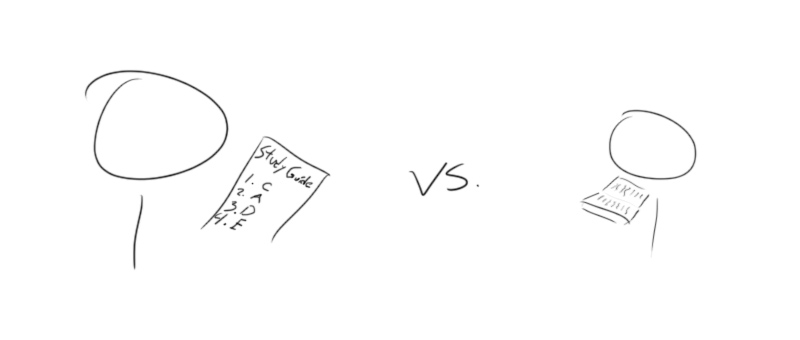
Study-Guide-vs-Story
Study Guide vs Story

One of the blogs I follow shared an article about why using textbooks and tests is doomed for failure. The thing that stuck out to me -- amidst the discussion of education funding, resource management, and needing kids to succeed in school -- was this simple observation: The only way to score well on a standardized test is to study the material directly from the test-maker's textbook. As my bloggy friend said, "The entire world has completely lost its mind."

Why is this so bad?

Forget indoctrination, bias, agendas, and lay aside your fear of political manipulation and social engineering by "the powers that be." Temporarily ignore your concerns that corporations, in bed with the government, are making gobs of money selling schools inferior materials that are detrimental to your child's future success. The real danger I see is this: We've made education a knowledge set rather than a lifestyle.

I enjoy a good conspiracy theory, but I don't think this was intentional. The accidental nature almost makes it worse. The simplistic version of story I see is this:

  • America wants its citizens to be successful and believes that education is the way to that goal.
  • Education becomes compulsory.
  • Number-crunchers are concerned with our results on international tests (perhaps wrongly).
  • Edutheorists and politicians want positive change and believe standardization does that.
  • The government awards corporations contracts to use public funds to produce these standardized materials.
  • These corporations use their own materials as the basis for textbooks and tests (likely driven by IP restrictions).
  • We end up with a bland, muted, "single voice" textbook approach that highlights the keywords kids need to know.
  • The tests are based solely on that information, even if inaccurate or unhelpful, in a bid to show positive results.

See, no one was trying to make education about the specific knowledge set of a test. It merely happened as people further and further removed from the learning environment got involved and were put in charge of things. And then, due to interesting forces, these materials turned ever inward on themselves until "correct" is now defined by exactly what they tell you, rather than messy, pesky things like reality, common sense, or definitions.

I've blogged before about how tests can quickly become about your mind-reading ability. And if, as the article points out, you can't list oil and gas as natural resources because they aren't on the teacher-provided list -- taken from the textbook -- the test becomes impossible because you don't have the proper study guide/cheat sheet.

[Aside: After reading a fascinating article on the difference between US and UK grading, I want to say this: The problem here is not testing or even standardized tests. I've learned much about the benefits of testing. The problem is that standardized tests are based on the proper regurgitation of specific information only found within approved texts.]

Your education under this model revolves around learning predetermined details. This is the knowledge set that defines your learning experience. You don't need to learn about reality, you must only memorize that the correct answer to question #13 is B. It doesn't even matter if B is factually correct. The system is grading you, and it is an inbred monster fed by a well-meaning public, like those societies that sacrifice their children to appease the vengeful gods.

And we're doing it, in large part, by accident.

We've forgotten what an education is supposed to be.

We've turned the 12 - 20 years of formal learning into the entirety of education. We've let details become the destination; we've lost sight of the end game as we've tried to clean out the muck and balance the social scales.

We, as homeschoolers, have an opportunity to avoid that trap, to walk the other way, and to ask -- and answer! -- the question: What Makes a Great Education? (Yes, the webinar is 1.5 hours long, but it's filled with good stuff from some really smart people; they let me say a few things now and again, too <grin>)

Learning is a lifestyle that is highly informed during formal education. But that's only one small part of life-long learning. We lay a foundation here, learning how to read and search and question and think, and then we go into life ready to keep learning.

How do we do on tests? Pretty well. We may not have the cheat sheets (er ... textbooks) that well-to-do schools have. Instead, we revel in amazing curriculum that helps nurture our desire to learn. Unlike the author of the article, who fears for the success of students from less funded schools, I think homeschoolers will continue to do well on standardized tests even if the current "crony capitalism" continues. Our focus is different. While schools focus on memorizing a specific knowledge set, we will continue to pursue a lifestyle of learning.

 ~Luke Holzmann
Filmmaker, Writer, Pseudo-Dad
P.S. I also recommend my post Education Is Not About Teaching.

Share this post via email


Submit
Tagged , , | Leave a comment

Does it matter?

Share this post via email


Submit

Picture1_NewsMy previous blog post focused on recent encouraging news reports featuring homeschoolers. As I was contemplating my blog post for today, it occurred to me that if you're anything like me, you may tend to avoid the news entirely! So I decided to re-visit the news "theme" for today's musings as well.

Between the busyness of life and the rather depressing content found in national news, it can be easy to shut out the world around us and just focus on what directly affects our families. Besides, Facebook and other social media is constantly full of people's opinions on world events, so who needs the news ... right?

A couple of thoughts ... besides missing the encouraging reports about homeschoolers that I blogged about the last time, if you ignore the news, you will also miss issues that impact the education of your children, and your reasons and ability to homeschool. Did you know that the Texas governor recently appointed a homeschool mom as the state education board chair? Or that homeschooling numbers in Canada are said to be skyrocketing? Or that a school district in Iowa is now asking its principals to wear clip-on body cameras during their interactions with parents and students?

Let's face it, while none of the issues I've linked to above may impact you or your homeschool specifically, they all affect education in some manner. And in reality, the world is a much smaller place than it used to be. So if you're homeschooling (or raising children, or own a home, or drive a car, or pay taxes, or ......) the news of the world really does impact you.

Second thought ... current events are a perfect, low budget, curriculum-free educational tool. In a 1990 book focused on using newspapers as a teaching tool, Edward DeRoche cited the following research results:

  • Students who use newspapers tend to score higher on standardized achievement tests -- particularly in reading, math, and social studies -- than those who don't use them.
  • Newspapers help teach students to be effective readers.
  • Newspapers can help develop and improve student vocabulary, word recognition skills, and comprehension.
  • Newspapers are effective tools for teaching many math concepts, particularly fractions, decimals, currency, and averages.

While print media may be losing its popularity, I think you can reasonably make the argument that these benefits still exist. Whether you regularly incorporate newspapers or news magazines or news web sites in your student's education, studying current events is indeed profitable.

Add to these the opportunity to have in-depth conversations about what is going on in the world, and how it affects your family. Think about this ... what is the best source for your children to learn about the recent SCOTUS decision, the uproar over the confederate flag, or transgender issues involving Bruce/Caitlyn Jenner? Do you want their worldview/opinions on these topics formed by Facebook? What better place to address these, and other world-changing issues, than around your kitchen table?

I would encourage you to use this summer to get you and your students "plugged in" to what's going on in the world around you. And don't limit yourselves to the national scene ... become more aware and more involved in the local news of your community as well.

Still on the journey ...

~Judy Wnuk

PS ... Check out Homeschool Chatter ... a good source for education/homeschool-related news stories.

Share this post via email


Submit
Tagged , , | Leave a comment

How My Homeschooled Children Found Their Careers

Share this post via email


Submit

It's a fear every parent knows, but homeschool parents might feel it more: Will my children be able to find a meaningful career ... that they love ... that will allow them to support themselves (and maybe a whole family)?

Of course, we can't force young adults to take any particular route, but we can be a loving coach that helps them discover good options. With some forethought and planning, we can help prepare them to land on a great track.

0378_Holzmann_9078

As John and I helped each of our four children (Amy, Luke, Jonelle and Justin, now adults) find their paths, we paid attention to four things. I thought I'd encourage you with these, and then I'll suggest a few resources at the end:

  1. Talents: When Luke begged for a video camera as a boy, we could tell he had an eye for framing and telling a good story. So we bought him one and watched him take off. He used that tool all the time. While children certainly have a huge learning curve when they undertake new endeavors, it was clear Luke had talent for media and filmmaking.
  2. Skills: When Jonelle started art classes in high school, she clearly had talent. But she went further than that and carefully cultivated the skills she would need to be a great artist. That took lots of patience and slow, hard work. If a child has talent, but doesn't want to take the time to develop the skills in a field, that field probably isn't the right fit.
  3. Desires: This is obvious, but worth digging deep into. What do your children want to do? What do they have a drive to do? Sure, Amy could have been an excellent high school English teacher. But she had zero desire to pursue that route. No sense in pushing our children into something they'd truly hate. There are enough options out there that we can probably find something they would enjoy and be successful at. Check out the resources below for ideas to help you in this quest.
  4. Personality: This one is huge. My husband John had always wanted to be a pastor. But after finishing his M.Div. and starting his first pastoral job, it became painfully clear that he doesn't have the personality for it; his true gifts lie elsewhere. I wish we had faced that reality sooner. Our son Justin, at one point, wanted to be an aerospace engineer (i.e., a rocket scientist). But he is the most extroverted, outgoing person I know. His attention is usually directed in 15 different ways at once. He would probably be bored to tears with the day-to-day work of an engineer. So we dreamed up other possibilities. And, from looking at personality profiles with him, it became clear that he has the magnetic persona perfect for sales and entrepreneurial positions. And that is the path he's followed - to his great fulfillment.

A helpful resource
In addition to any local mentors and resources you can find, I highly recommend Sonlight's College and Career Planning course for your high schoolers. It will help them identify their talents, skills, desires and personality. It will help spur conversations with you about their dreams, and will encourage them to be both inspired and practical about their decisions. It also includes very practical step-by-step guidance regarding college admissions for homeschoolers. (And yes - homeschoolers can get into college just as easily as other students. Some colleges even prefer homeschoolers because they know these students will come in ready to learn.)

How my children's stories turned out
If you're curious, Luke did end up going into film. He majored in film at Biola University and now works as a media specialist for Sonlight. He filmed and produced the ever-popular MathTacular series, and even runs a free online film school on the side.

Jonelle got a scholarship to art school. We knew it'd be extremely difficult to make a living as a "traditional" artist living off of commissions and art shows, but we could see that her art and communication skills combined would serve her well as a graphic designer. She majored in graphic design and worked for an ad firm after school, as well as a designer for Sonlight for a while. She now stays at home and homeschools her three children, and also helps me on the curriculum development side of things at Sonlight.

Amy graduated with a degree in Literature. After several years living a suburban life with her engineer husband and their children, she and her husband Phil both felt a strong, clear calling to move to Virginia and start a homestead farm on unbroken land. They knew they had the personalities for such a difficult endeavor. (They both have unbounded energy and a deep love of learning new things.) So they took the plunge and became farmers. Amy and her husband now homeschool their five boys and farm the land. Amy contracts on a part-time basis to help develop curriculum for Sonlight. She has also followed God's call to use her shepherding and hospitality gifts to offer her house as a safe haven to nearby university students, who come over for impromptu prayer, discussion, guidance and love.

Justin has jumped around to several different jobs since college. He's found he loves entrepreneurial work, but it still waiting to break into whatever big thing will be his life's work.

Room for change along the way
As you can see, the first job out of college does not determine everything. Your children have a LOT of room for change along the way. Unlike my generation, the generation coming into the workforce now is likely to change careers multiple times throughout their working life. So one of the best gifts we can give our children is a love of learning and the confidence that they can learn and master new endeavors.

And as a parting word, I also heartily recommend that we teach our children (boys and girls) homemaking skills. The transition to adulthood is hard enough as it is. Let's give them the skills to be able to cook, clean, handle their finances, know how to maintain a car, etc. before they leave the home. As food for thought, check out a Sonlight mom's recent post: 7 Skills My Kids Won't Be Leaving the Nest Without.

What do you think? What are your biggest concerns with helping your children find their careers? Have you found resources to help?

Blessings,
Sarita

Share this post via email


Submit
Tagged , , , | Leave a comment

25 Years (& 16K books) Later: My Favorite Part of Making Sonlight

Share this post via email


Submit

As we gear up for our 25th anniversary celebration next week, I've been thinking about the joys of being part of Sonlight all these years. This post shares one of my highlights.

My parents didn't oversee much of what I did as a girl. As Dutch immigrants with a deep respect for educational institutions, we certainly never discussed what I was learning. I went to Christian school, and my parents trusted things were going well.

So I must have become a bookworm on my own. Our house was usually pretty quiet, and I remember countless evenings in the living room as my mother, father and I all read to ourselves. My brother would go off to watch TV in another room, but that never interested me. I much preferred my enthralling world of books.

Each week I would ride my bike to the public library and check out 50 books, the maximum number allowed. I simply wandered the children's section and picked whatever caught my eye. (Fortunately, children's literature was a lot tamer in those days than what you'd find in some corners of the children's section today.) I'm pretty sure I read every single horse book in that library. I'd pack my books into the saddlebags on my bike and ride home. I'd read them all in a week and then turn around and do it again.

I found solace and deep pleasure in reading. And I still do. There's just something magical about visiting other times, places and cultures through a good story.

These days, I fill many roles for Sonlight. I do everything a typical president of a company does. But I also get to spend lots of time in curriculum development. And as part of that role, I get to do my favorite piece of my Sonlight work: I get to read.

Sarita reading
I estimate that I've read at least 16,000 children's books since we started Sonlight 25 years ago. And that's a low estimate, just to play it safe. I curl up in my designated reading chair at home and enjoy at least twelve books a week. Every few years, that chair gets plum worn out and we donate it and replace it with another one.

Though my reading as a girl really had no direction to it, my reading today does. I read scores of new and classic children's books on the hunt for the very cream of the crop to include in our programs. When we first started Sonlight, I drew on my list of favorites that I'd read throughout the years. Now I get to keep adding to that list.

I read most books very quickly, since most are nowhere near worthy of including in a Sonlight program. But I do in-depth evaluation of several books a week. If a book is so good I want to read it again right away, I get out my 7-point test to evaluate it further.

And when I think of the past 25 years of Sonlight, I know beyond a doubt what my favorite part has been. The reading. The chance to share these amazing stories with others.

I have a feeling you might say the same as a Sonlight user. Out of all the parts of homeschooling with Sonlight, the times most moms cherish the most are when they get to sit down each day with their children, breath deep, and dive into a great story. Those special hours immersed in Sonlight books together, knowing it's all woven together into a cohesive education ... those hours are what make the Sonlight experience so special. And I wouldn't have it any other way.

Happy reading,
Sarita

Share this post via email


Submit
Tagged , , | 1 Comment

Want Your Early Elementary Students to Experience Wonder & Delight?

Share this post via email


Submit

Turn your homeschool from routine to remarkable—this guide shows how Sonlight’s engaging resources inspire true wonder and delight in young learners.

Continue reading
Share this post via email


Submit
Leave a comment

A time for celebration ...

Share this post via email


Submit

Celebrating-25-YearsFor our family, the month of June is full of opportunities for celebration this year. Last year I wrote a post about milestones and celebrations and it struck me this morning that it is time to review our milestones again.

Last Saturday our extended family celebrated two rather large milestones. My husband recently retired from a state job which he has held for 40+ years! Not many people hold the same job for 10 years, let alone 30 or 40. So it was truly a cause for celebration. Our middle daughter graduated from college last month. Another reason to celebrate as she has worked particularly hard to get her Bachelor's degree without incurring any debt. So we enjoyed a wonderful picnic together last weekend and marveled at God's goodness and provision along the way.

Monday evening I enjoyed a special time of fellowship with some good friends of mine who meet every June to celebrate our birthdays. 10 years ago we were all attending the same church and decided to form our very own June Birthday Cheesecake Club! Cheesecake is a wonderful way to celebrate ... and though many of us have moved away or moved on (we graduated one of our members to heaven two years ago), we faithfully get together every year to celebrate God's goodness and provision in our lives.

Two weeks from now I will have the privilege to join another wonderful celebration. Our staff and some of our customers will meet together in Colorado to celebrate God's goodness and provision in the life of Sonlight Curriculum. 25 amazing years of helping families craft their stories and develop a love of learning in their children is certainly a noteworthy milestone. I hope you'll be able to join us as we gather to consider what God has done.

What milestones are you celebrating this year? May you take a few moments today to consider what God has done in your family.

Still on the journey ...
~Judy Wnuk


Share this post via email


Submit
Leave a comment

Pursuing passion ...

Share this post via email


Submit

Picture1_NewsHomeschoolers have been in the media spotlight of late ... for both negative and positive reasons. As I've grieved over the news that has been  difficult to read, I've also been impressed by those who have represented homeschooling so well.

In pondering these recent events, I'm reminded that while one's ability to win a spelling bee is not tied specifically to home education, it is true that homeschooling allows children room to pursue their passions. As Michael Smith, president of HSLDA has commented in the past, Homeschooling is not a magic ticket to academic contest victory ... yet homeschooling does allow for extra flexibility for children to pursue what interests them.  While there was never any guarantee that my daughter's passion for karate was going to launch her to the Olympics, or my son's passion for baseball was going to gain him a sports scholarship, very often the pursuit of interests turns into something quite phenomenal.

Consider, for example, the life of young Sawyer Fredericks. This 16 year old homeschooler lives on a small farm in rural upstate NY and has had the freedom to pursue his passion of music to wherever it might take him. In February this year, that passion landed him on The Voice, and earlier this month, he took home first place.

14 year old Amanda Whitworth is a second generation homeschooler who is, this week, one of the many homeschoolers who make up 10% of the finalists in the Scripps Howard National Spelling Bee. It is reported that homeschoolers will also make up greater than 10% of the contestants in the National Geographic Geography Bee later this year.

While homeschooling is certainly no guarantee of fame, it is interesting to me to consider what part home education plays in allowing a student to pursue those things that are of interest to them. Homeschooling has its fair share of detractors, but one can certainly not argue with the rather lengthy list of noteworthy individuals who were taught at home and pursued their passions to great heights.

So if you are tempted to doubt your choice to homeschool in these days of negative publicity, be encouraged that you are offering your child(ren) the opportunity to explore and pursue those things that are of interest to them. You have the flexibility to arrange your daily schedule of academics to make room for things like karate, baseball practice, guitar lessons, and even studying for spelling and geography bees! Mornings spent shadowing your local veterinarian or afternoons spent volunteering for an adaptive horseback riding program for mentally challenged adults are unique and uncommon opportunities that your students might otherwise miss were they tied to a set classroom schedule. And all those extra-curricular activities and experiences that fuel your student's passions make a great addition to their portfolio as they apply to colleges in the future. There are no limits to where your child's passions can take them. Just ask the Tebow family.

Still on the journey ...
~Judy Wnuk

P.S. If one of your children has an interest in music, consider pursuing that potential passion through our Piano Wizard promotion. But don't wait too long, it's almost over!


Share this post via email


Submit
Tagged , , , | Leave a comment