Please Read Books Instead

Share this post via email


Submit

He grew up a student of the school system. History was little more than a series of titles and dates mixed in with social studies. It wasn't until the sixth grade that a teacher read a well-written story from history to him. In that moment, history became interesting.

He's a history teacher now. He's passionate about the subject. He clearly loves research and tying themes together. That's great.

Tragically, his history courses are mostly about social studies. As I reviewed the DVD he sent me, I kept waiting for him to share a story. I desperately wanted him to give me the same thing he experienced as a 6th Grader. But after two lectures, I had nothing more than a few compiled facts and opinions about a society. Not a single story. Nothing to hook me. "History" was boring.

Key words flashed on the screen. "These are important," I was told. "So be sure to write them in your notes."

I'm not against note taking. If writing something down helps you remember it, fantastic! I dutifully fill in the blanks on the sheet provided with the sermon each Sunday. But learning history is not akin to recalling terms like "the people of the mountain" associated with a particular people group. Telling me that slaves were of little importance means nothing either. But if you shared a story about a slave who lived among a people on a mountain, I'd get all that. More that than, I'd be interested.

Give your students a powerful advantage in their studies with a literature-based curriculum. Allow history to come alive for your children. Give them an education that encourages them to find history interesting. Please read books instead.

By all means add media and other resources to your schooling. But continue to use great stories as the basis for your studies. A great story sparked a passion for history. Imagine what an education based on great literature would do.

You don't have to imagine.

You can read about this year's Scholarship Winners and hundreds of Sonlight Moments. And with Sonlight's Love to Learn, Love to Teach Guarantee, you can experience this for yourself and prove it works for your family.

If you've experienced the benefits of reading great literature in your homeschool, please share!

 ~Luke Holzmann
Filmmaker, Writer, Empty Nester

Share this post via email


Submit
Tagged , , , | 4 Comments

The Difference

Share this post via email


Submit

A few summers ago my family had to opportunity to travel on a long-abandoned stretch of historic Route 66 over the mountains between Kingman, Arizona and Needles, California.

The further we got from the Interstate the further back in time we went. I could easily imagine what it must have been like for the Okies who left the Dust Bowl during the Great Depression in hopes of a better life in California.

We didn't have to travel that route to get where we were going that day. In fact, it was somewhat of a detour for us to go that way, but we wanted to just for the experience of it. And it was, indeed, an experience we will never forget.

The old highway is narrow and twisty. It follows the contour of the land winding up and around the mountains. There are sharp drop-offs and blind curves. It is not an easy road to drive. It is fascinating, though, with interesting things to see and intriguing intersections leading off to who-knows-where. We especially enjoyed watching for the wild burros. And we speculated about the travelers who had been this way before, generations ago.

The Interstate we had left behind by-passed the mountains and rough places. It was wide and smooth, and easy to travel. We would have reached our destination sooner if we had stayed on the (boring) Interstate. But that wasn't the point that day.

Contrasting the two routes reminds me a little bit of homeschooling. Sending my kids off for someone else to educate would certainly be the easiest route (at least for me), but choosing "the road less traveled by" has been so much more rewarding over the years. I'm convinced our family is closer as a result of the extra time we've had to spend together. We've been able to customize our learning plan to specifically meet the needs of each of my children in ways that a classroom school never could. And we've had time to explore side-roads and admire the scenery along the way.

Two roads diverged in a wood,
and I, I took the one less traveled by,
And that has made all the difference.
--Robert Frost

Enjoying the adventure,
~Karla Cook
Lifelong Learner

Share this post via email


Submit
Tagged , , , | 1 Comment

Inadequate, Boring, Backward, Limited and Cruel Education

Share this post via email


Submit

My wife has been re-listening to The History of Rome podcast. This morning she told me a bit about what the Roman education system was like (yes, she's already up to episode 87). The basic idea: Require students to memorize stuff. Period.

"Once a kid got out of school, he was almost guaranteed to never want to learn anything ever again. It was that bad." As my wife described the joyless process of reading for the sake of reading--not to enjoy or learn or think--she shifted to one of her latest pet observations: Rome lacked creativity. They stole their culture and religion from the Greeks. And that makes sense if your students are only taught to regurgitate what they have been given to memorize.

The "obvious" step here would be to compare our current public educational model with this ancient classical approach to learning. But I don't think that would be wise.

First, I'm not convinced the public schools are that bad. I've heard from a few people that they never want to read a book again. At the same time, they often love stories. Overall, the kids I know are bright, inquisitive, and happy to learn stuff. The system has much improved from how it was in ancient Rome.

Second, while schools certainly "teach to the test"--so much so that teachers are saying "I quit" (another here)--the problems are larger than that. For example, the Common Core is failing to help keep publishers on task as exemplified in this video. "Literature & Writing" texts are directed at teaching kids emotional pleas for social issues not, you know, writing and literature.

Third, I'm more interested in focusing on the benefits of our approach. The more Brittany told me about Rome, the more ways I was encouraged to know we do it better. Example: Instead of forcing kids to memorize the sequence and names of the alphabet before seeing a single letter, we regularly focus on the sound a letter makes and emphasize that sound in words when playing with my youngest niece.

As homeschoolers, we can take what works and give our children a life-long love of learning. And if we can learn from the inadequate, boring, backward, and limited ideas about education from the past, so much the better.

Keep up the great work you are doing in raising up the next generation!

 ~Luke Holzmann
Filmmaker, Writer, Empty Nester
Share this post via email


Submit
Tagged , , , | 1 Comment

Challenge or Content?

Share this post via email


Submit

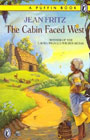
Cabin Faced WestOne of the frequent conversations I have with folks making curriculum choices is the "challenge or content" discussion. It goes something like this ... "my son is reading at a 6th grade level, but he's only 9 years old. So how do I choose curriculum for him? If I get him a 3rd or 4th grade curriculum package, surely he'll be bored because the reading material will be too 'easy' for him!"

There are a number of "negative" reasons for not choosing a 6th grade curriculum for a 9 year old, but one "positive" reason is this. Once your student knows how to read independently, Sonlight often chooses literature for its content, as opposed to focusing just on the challenge. While a student may find a book "easy" to read, it does not mean the value of the book is lost on him/her. While learning about George Washington in our Core D program (Intro to American History, Year 1 of 2), the historical fiction piece The Cabin Faced West rounds out Washington as an individual, and provides a fascinating backdrop to everyday life in late 18th century America. Is it a "hard" book to read? Not at all ... but the story itself adds such flavor and interest to the study of American History, that there is no "shame" in having an advanced reader spend time with this title.

Having had three very different students in our homeschool, I do understand that some students thoroughly enjoy the challenge of a book written just above their level. And there is nothing wrong with feeding that desire. But don't discount titles that are written at your student's "age" level just because they seem to be an easy read. Learn to see beyond the grade level on the book, to the value of the content contained between the covers.

Still on the journey ...
~Judy Wnuk
Sonlight Customer Champion

PS: Speaking of reading ... if you're looking for some top-notch literature for your students for the summer months, check out Sonlight's Summer Reader packages!


Share this post via email


Submit
Tagged , , | Leave a comment

What Went Well This Year?

Share this post via email


Submit

Heather Sanders has a good post on how praising your kids can backfire. It reminded me of the article about how we should praise a person's efforts rather than intelligence. If you haven't at least skimmed the article, please do so.

"The 'smart' kids took the cop-out." For me, that observation is a no-brainer. If a task--like school--is about looking good or performing well, the intelligent move would be to ensure you meet that standard. There is no benefit to trying to get better. That's why I'm thankful I was homeschooled without grades: Grades only deterred me from trying things I could get wrong. Homeschooling allowed me to focus on getting it right which naturally encourages you to try harder and improve.

As you look back on this last year of homeschooling, what has gone well? What specific areas of legitimate praise do you and your children deserve? I love the story Heather shares in her post, and I think there is much we can learn from it. But what else went well? What area of struggle did your son or daughter persevere through--despite the tears and frustration? That is something to praise as well!

May our children constantly strive to learn more and improve. May they see challenges as opportunities. May they never succumb to situations where the "smart" thing to do is give up when they should have carried on. And may the same be true of us.

So what went well this year? I'd love it if you'd come and "brag" a bit about what you and your children achieved!

 ~Luke Holzmann
Filmmaker, Writer, Empty Nester

Share this post via email


Submit
Tagged , , , | 4 Comments

A few simple lessons

Share this post via email


Submit

I returned home from Milwaukee late Sunday night. My mom, sister-in-law Brittany, and I had met up with my sister Amy for a weekend training class on urban gardening at Growing Power.

I thought I'd share a few thoughts as I process my weekend.

1. It's good to take time to learn new things.

When I was done with college I vehemently stated that I was done with school. I had hated my public high school experience and, while I loved my first two years of college, getting married and trying to finish school were very difficult. I didn't think I'd ever want to go back.

Fast forward four years and I had a conversation about becoming an expert with Amy. Amy mentioned an article she'd read that said you should pick 5 or so things you are passionate about and become an expert. I really liked that idea so I chose food, fashion and interior/exterior design.

I started with fashion and food. And, three years after my conversation with Amy, I'm back in school, studying to become a homeopath.

It was so fun to take a break from my current studies and go learn more about food. I went to two sessions, one about growing mushrooms (surprisingly easy!) and another about compost and vermicompost (worms). We already try to compost, but I'm excited to put their ideas into practice. It felt good to stretch my brain in a different direction. It was a blatant confirmation about the other learning I've been doing and how important, and life-giving, continued learning can be.

growing-mushrooms
Beautiful mushrooms at Growing Power

2. It's important to remember it's not always about you.

Our flight out was delayed 5 hours. My mom, Brittany and I had changed our flight earlier that week so we could arrive closer to the time Amy was landing. So, to then see our time slipping away made it even more frustrating.

I'm embarrassed to admit I found myself thinking, "Why God? Why is this happening to me? I see my sister so infrequently, please, just let us meet up soon so we have more time."

It was good to get the still small voice reminder that, I'm not the only one affected. I'm not the only one who might need to be learning something, gleaning something, gaining something from this. To just let it go and say, "well, I don't understand, but, it will be (is!) okay."

3. Hard conversations are worth it.

While meeting up, we had a few tough conversations. Things that needed to be addressed and that were better brought up face to face. Don't get me wrong, we also had a lot of lighthearted, easy-go-lucky talks as well. But, it was good to bring things up that needed to be addressed.

This is hard for me. I tend to know what I "want" to say, but shy away from speaking as boldly as needed. But, in the end, I felt progress was made and we were able to leave with a deeper understanding of the issues, and even ways of putting things to rest. We covered the weekend with prayer and the Lord was with us. Totally worth it.

4. Spending time with like-minded people is more refreshing than we realize.

Being around these people who were thinking about food--how to grow it, how to reuse through compost or vermicompost, how to use greenhouses to grow food all year round--was a jolt. It was shocking to be around a bunch of guys talking about growing lettuce in their aquaponic systems. So different from the group I am generally surrounded by. (Not a worse group, just very different!)

It reminded me of how important it is to find those connections with like-minded people. Whether it be fellow homeschoolers, people with the same taste in food production, or even just the weekly gathering of fellow believers, these times can be so encouraging. It reminds us what's out there, what we can still learn about, that we aren't alone in our walks of life. It's great to be different with others.

5. It really does make sense to pack all of those things "just in case."

I made a conscience decision to bring only a very light sweater, no jeans, and no tennis shoes. It had been in the 90s in Colorado, and, while the weather said low 70s in Milwaukee, I figured it would just feel good.

It didn't. I was freezing. Sitting in the airport: freezing. On the plane out: freezing. Every evening as we walked about: freezing.

So, take it from me, just pack those jeans. You really might want them.

amy-brittany-jonelle
Amy, Brittany and Me (You guessed it, I was freezing)

Until next time,
Jonelle

Share this post via email


Submit
Tagged , | 1 Comment

Literature-Rich Doesn't Mean, "Stay Inside"

Share this post via email


Submit

It's no secret that Sonlight offers literature-rich curriculum. But does this mean that a child who use Sonlight spends all their time with their nose in a book? Hardly.

I'm always fascinated by the variety of photographs featured in the Sonlight catalog. Not only are children enjoying learning, often with their families, but many of them are outdoors.

Whether they are doing science experiments, engaged in nature studies, or simply reading outside, Sonlight is not about locking kids in a musty library and throwing away the key! Just flip through our catalog and you'll quickly find families involved in all kinds of activities, eager to learn and curious about the remarkable world around them.

But we do realize the power of great literature. It can take children to places they might not get a chance to see in person, and also to interesting historical eras where they can "meet" the people who have literally made history.

In his insightful little book An Experiment in Criticism, C.S. Lewis offers some wonderful commentary on why people enjoy literature: "We want to see with other eyes, to imagine with other imaginations, to feel with other hearts, as well as with our own ... We demand windows ... One of the things we feel after reading a great work is 'I have got out.' Or from another point of view, 'I have got in.'"

What kinds of activities do you and your children enjoy when homeschooling? Do you spend time learning outdoors? Why are you drawn to literature-rich curriculum?

Robert Velarde
Author/Educator/Philosopher

P.S. Once again I'm near Colorado wildfires and, as a result, am reminded of a relevant blog post I wrote last year around the time of the Waldo Canyon fire: "What Matters Most?"

Share this post via email


Submit
Tagged , , , , , , , , , , , | Leave a comment
