From Luke's Inbox: A for Effort

Share this post via email


Submit

I adjunct for a junior college. Many of my students are single moms. They may not do as well as the other students on tests, but they are often working 20 to 40 hours a week, taking care of kids by themselves, and still taking colleges courses. They may work much harder than the other students, but that isn't reflected in test scores. I wish there was some way to assign a grade for effort. Suggestions?

First, I recommend you check out my post that spells out what I see as the big picture in grading. Short, short version: Help your students love learning, give them ample opportunity, and grading becomes rather meaningless. Stick to pass/fail if you must do something (and let them constantly work toward passing). In this system, as long as a student wants to learn, they are rewarded. Students who don't need the course move onward. And students who are not interested in learning don't skate by on a technicality.

Second, I think we muddy the waters when we try to make grades about effort. The saying "A for effort" is ironic for more than just the single-syllable pseudo-homophone. This problem arises when we try to make grades about both measuring performance and motivating involvement (the first two of the three reasons most people grade stuff). These are two separate goals, and sometimes at odds with one another. Sure, we like to believe that trying equates to positive outcome. But that is simply not how the world works. In fact, in our "try, try again" mindset, we sometimes forget that our endless attempts will not necessarily produce our desired results (as in failed business). Often times it "merely" takes thousands of attempts to figure something out (as with the light bulb). How do we reconcile our goals? Let's start by stating them clearly:

  1. We want to adequately track how a student is progressing. In a perfect world, a student with an A is rocking, a student right in line with the average has a C, and the students who are simply not getting it are stamped with an F. But we all know this is not how the school system usually works. The goal is that every student has an A -- meaning, they are complying with the work and testing -- and only poor students earn Cs by refusing to turn in homework. Grades are not the best method for this. Attention to each individual student gives a much clearer picture of where they are with the content. And for those who don't test well, they are not given a false stigma of stupidity.
  2. We want to encourage a strong work ethic. In this approach, every student who puts forth effort has an A, those who don't stay on task get a B, the student who lollygags gets a C, and those who don't show up or turn anything in earn an F. This falls apart if a student is spread too thin or, far more frequently, finds the notion of a mark on a paper little incentive to go too all the effort of staying awake in the desk. History has clearly shown that this system fails to equip genius, pushes kids who need more time to abandon education, and rewards compliance over learning.

Bringing it all together now, the only grading mechanism I know that fits both of these goals is the binary Pass/Fail with the chance to try again and again and again. This is really what we want people to learn. We want them to keep trying until they get it right. Anything less is rather useless in the real world. The fact that semesters and grade levels don't accommodate that is a fault and flaw of the school system.

Third, I wonder if we need to create specific awards that reflect our actual goals. I have sports awards for MVP, Personal Bests, Leadership, Most Improved, and more. With these we can speak directly to a student's specific situation, reward the things we actually care about, and promote the practices we want to encourage.

Sonlight revolutionized home education. Our literature-based approach to learning continues to dominate homeschool curriculum. Why? In part because we focus on learning and not testing, grades, or other arbitrary measurements. Our goal is to instill a love of learning. With that foundation, students will succeed.

If you're looking for a homeschool curriculum that you and your students are guaranteed to love, it's time to discover Sonlight.

 ~Luke Holzmann
Filmmaker, Writer, Guardian

Share this post via email


Submit
Tagged , , , , | Leave a comment

Math: A Reason to Homeschool

Share this post via email


Submit

It's 11:13 at night. My bedtime has slumped over in the corner somewhere, too tired to continue begging me to sleep. My cousin and I are working through her math homework. We've just encountered an equation with imaginary numbers.

"Do you remember going over imaginary numbers in class?" I ask.

She shakes her head dubiously. I'm pretty sure she's never even heard of imaginary numbers before now. Calvin and Hobbes had, thankfully, introduced me to them years ago. It's been awhile, but I think I'm up for it.

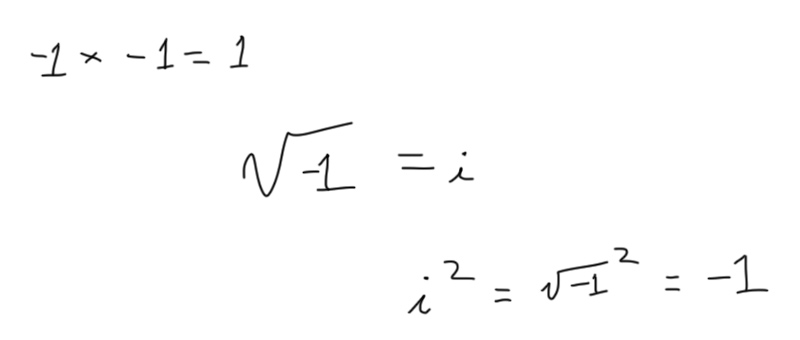
"What number times itself equals -1?" I ask.

Her blank stare continues.

Five minutes later she's at least giving me a halfhearted nod when I show her the square root of negative one squared. And as we finally head off to bed -- her promising to visit her math teacher so she can explain the math problems that I couldn't figure out as the clock nudged itself toward midnight -- I realize that math is yet another reason to homeschool.

Imaginary-Numbers
Imaginary Numbers

With math, you can teach it the first time.

As homeschoolers, we can camp on or return to a topic as long and often as a student needs. The classroom requires that we waste students' time. Incomprehensible homework is the embodiment of this inefficiency. I have to learn this content anyway so I can teach it to my student. It would have been better to just teach her math from the start.

Plus, I could have purchased a math curriculum that actually solves each problem for me, step by step. Instead, my tax dollars purchased this pathetic textbook that provides zero explanation for the majority of the problems in the chapter. It's maddening.

I've had people ask me how homeschoolers teach advanced subjects like Calculus. Jill has a great response to new homeschoolers who know they don't know everything. But for the incredulous toward home education, let me say this: I have to teach my student many of her math lessons because the teacher failed to do so. I'm not saying her teacher is bad at her job. But whatever the cause -- lack of time, resources, opportunity, skill, or observation -- students all over this great country are required to learn this stuff at home. I think they'd have a higher success rate if you were there to help them.

Enter homeschooling.

 ~Luke Holzmann
Filmmaker, Writer, Guardian

Share this post via email


Submit
Tagged , | 4 Comments

Grades: Measure, Motivate, Monitor?

Share this post via email


Submit

Apparently the median grade at Harvard is an A-. For me, this begs the question -- yet again -- why do we have grades? What is their purpose or function?

Report-Card
Report Card

I see three possibilities off the top:

  1. Grades measure how a student performs
  2. Grades motivate students to work harder
  3. Grades monitor how a teacher is doing

If grades measure a student's performance, I find them detrimental to learning. Students who already know the material do best in these situations, and so those with the highest grade are those who lease need the course. That seems backward. Conversely, those students who have the most to learn are penalized unless they are able to, at the moment of examination, demonstrate a complete grasp of the content. Again, if the purpose of a course is to teach students new skills or knowledge, measuring performance is the wrong way to go about things.

If grades are to be a carrot to lure students onward, I find them deleterious to learning. For those of us who care about grades, we focus on the grade and ignore the opportunities to push ourselves. I played the grade game and won, but to an unknown loss in high school. For those who realize the grade game is stupid and opt-out, there is no other motivation to learn in the system. It is designed to offer a single reward, and if we don't want it, there is no reason to bother. My wife, as well as many of my friends, all experienced this demotivation.

If grades provide a way to monitor teacher performance, they have proven destructive to learning. I've read numerous reports of teachers and school districts cheating on tests to raise scores. The teachers I know are furious and frustrated that they are more and more required to "teach to the test" instead of doing their jobs. That system is broken. It pushes teachers to want to hand out As so everyone thinks their students are doing great. This is, it appears, Harvard.

Better, by far in my observation, to dispense with grades altogether. As homeschoolers, we get to focus on instilling a love of learning, a desire for knowledge, and a passion for getting things right. We don't need to play games or find external motivations or artificial ways to validate the work we do.

So keep up the good work!

Standardized tests can be a great way to find areas of struggle and help you refocus your efforts. Your student may really enjoy positive feedback as you mark work complete. And I think it is a great idea to celebrate accomplishments.

But let's do one better than Harvard and focus on learning and not some skewed grading system.

 ~Luke Holzmann
Filmmaker, Writer, Guardian

Share this post via email


Submit
Tagged , , | 3 Comments

How Not to Evaluate Homeschooling

Share this post via email


Submit

Update: Since this post was first written in December 2013, I've had an opportunity to reevaluate it. In light of several comments and insights, combined with a rereading of the original article in question, I've come to see that I've made key mistakes in this post. The original article cited, for one, was not a good choice in making my points about how not to evaluate homeschooling. For another, I did not accurately represent the article. This is due, admittedly, to carelessness on my part, not on the part of the original article. For example, the original article really does not contain anything that is overtly critical of home education in general. In closing, I apologize for misconstruing the article mentioned below and for causing confusion among readers of this blog. I'll do my best to avoid such errors in future posts. In addition, for the record neither myself or Sonlight support harmful home education practices, but instead encourage a loving, nurturing learning environment where ideas are openly discussed and children are educated, not indoctrinated. 

Recently I came across an article in The American Prospect titled, "The Homeschool Apostates." It's hardly favorable regarding home education, highlighting examples of individuals who were raised as homeschoolers, but who now are essentially rebelling against the ideals they learned.

The article in question presents extreme examples of homeschooling situations that are hardly normative. In one example offered, the parents are depicted as being highly legalistic, controlling, isolated from others, and inflexible in their approach to education. It's not surprising given such circumstances that the children would ultimately rebel. As the article states, "Their parents wanted them naïve and sheltered."

I'll point out three errors in reasoning that are present in The American Prospect article (there are others, but these three are particularly important). First, examples that are not normative among homeschoolers are set forth as being typical. In other words, although such extreme circumstances and situations do exist, they are not broadly representative examples. In short, it's not helpful to base one's analysis of something, such as home education, on the basis of non-normative examples and circumstances.

Second, to judge the whole of homeschooling on the basis of limited individual examples is not the best approach. The logical fallacy of composition holds that what may be true of the parts is not necessarily true of the whole. In the case of certain criticisms of homeschooling, the whole of home education is being judged on the basis of certain parts--parts that are not normative or typical, but in fact are extreme examples.

Third, logical counterexamples may be used to demonstrate that certain arguments against home education are false. It is certainly the case that not all homeschooling parents are legalistic, abusive, or haphazard in their approach. There are many examples of well-rounded, intelligent parents and homeschooled children (just look at some of Sonlight's scholarship winners, for instance).

Finally, Sonlight seeks to foster learning, not isolation from ideas or the world. We want every child who uses Sonlight to be able to engage and understand ideas and be open to thoughtfully evaluating different viewpoints (even ideas that are directly in opposition to their worldview).

Robert Velarde
Author/Educator/Philosopher

P.S. Since this is my last blog post before Christmas, I thought I'd quote one of my favorite passages in reference to the Incarnation: "The Word [Christ] became flesh and blood, and moved into the neighborhood" (John 1:14, The Message). Merry Christmas!

Share this post via email


Submit
Tagged , , , , , | 24 Comments

Save 50% when you update your Sonlight Instructor's Guide

Share this post via email


Submit

Sonlight's per pupil cost drops the more you use one of our programs. Because almost everything in your Core or Multi-Subject Package is reusable, adding an additional student requires a few consumable activity sheets or workbooks and little else. So you can continue to use and reuse the same Core years after you purchase it. Just be sure to get all the consumables you'll need when you first order. We regularly update our homeschool curriculum and may not carry the older items when you're ready to use the program again.

But what if you see an update to a program that will make your life blissfully easier? We want you to be able to update your program for a fraction of the cost. That's why we have an Instructor's Guide Repurchase Discount. If you bought an IG from us years ago (by itself or as part of a package), you can update it to the latest edition for half off. And if next year you want to update again, you'll save 50% once more. And again. And again.

Simply add an IG you already purchased from us to your cart, and we'll give you the discount. It's that easy.

Often with an update, we may switch out previous books with improved titles. To quickly add the new books, pull up the package and click on the Items tab. There you will find a "Show Previously Purchased Items" checkbox. Now you will be able to easily see the items you do not currently own.
Previously Purchased Items
We're here to help you have a successful homeschool experience year after year after year. Sonlight's IG Repurchase Discount is just one of the many ways we can do that for you.

 ~Luke Holzmann
Filmmaker, Writer, Gaurdian

Share this post via email


Submit
Tagged , , , | Leave a comment

Help Your Children Grapple with the Fact that We're Sinners

Share this post via email


Submit

After some heinous atrocity against humanity, those who knew the perpetrator often say something like, "He was such a nice man!" It does not matter if it was violent, sexual, criminal, or dishonest, we seem to expect the "bad guys" to wear black hats and sport tell-tale mustaches. When a teacher, pastor, neighbor, friend, or relative commits a wrong, it clashes with our tendency to put people in the category of either "good" or "bad."

Bad-Guy
Bad Guy

Take the famous example of the guy who raped a girl, had her husband knocked off to try to cover it up, and only owned up to it after he was caught. What's more, king David got to keep his leadership position! Crazy, right? David was a man who wanted to follow God and who did some absolutely terrible things.

I don't know about you, but I'm still a sinner too. I need to ask for forgiveness from my family now and then because I do something I shouldn't. I still commit plenty of "victimless" crimes on a regular basis, like speaking my mind to bad a driver when the roads are icy. I believe my heart is largely in the right place (longing to be transformed by the Holy Spirit), but I'm only clean because of Christ's shed blood. I am a complex person. And while most of my motivations and actions can be broken into categories of right and wrong, you'd be wrong to label me as a purely "good" guy.

Long before series like Game of Thrones swept through popular culture, I had already encountered complex characters. I had already seen how good people can do bad things and bad people can do good things. We see this frequently in the Bible. I also witnessed it again and again in the literature that I experienced through Sonlight. In fact, complex characters is one of the seven things that make Sonlight books All Stars.

Complex characters give us opportunities to help our children grapple with the fact that the world is full of sinners. Some of us are seeking to follow Christ, some are doing our own thing. Sometimes we make good choices, sometimes not. We all need redemption, and it is so cool when we get to let the love and grace of God spill out of our lives into the lives of those around us. And I believe great literature and modeling forgiveness for our children are both great ways to help them separate the action (both good and bad) from the person.

 ~Luke Holzmann
Filmmaker, Writer, Guardian

Share this post via email


Submit
Tagged , , | Leave a comment

Touching the Future...

Share this post via email


Submit
Teaching my granddaughter to roll out a pie crust. She really got the hang of it.

Teaching my granddaughter to roll out a pie crust. She really got the hang of it.

Lately I have thought a lot about what it means to invest your time in teaching a child. A few days ago I thought back to a day, many years ago when I was living in Florida.

It was a cold winter day on that fateful January day in 1986 when Christa McAuliffe became the first civilian in space. I will never forget that morning. I was seven months pregnant with my fourth child and had been running errands with my three year old son when we stopped at a fast food restaurant to grab a quick snack.

As we were heading in, people were rushing out. I heard a man shouting,

“The shuttle exploded!”

We all looked in the sky and saw that terrible white cloud, the cloud filled with shattered dreams, as it hung unnaturally in the sky. People began crying. We tried to console each other that maybe the astronauts had ejected or maybe it wasn't as bad as it looked. But we could see, looking at that weird white cloud, that no one could have survived.

As we silent strangers went our separate ways I couldn't shake the feeling that we had lost some of our brightest and best. It was haunting because no matter where I went, or what I did, I could still see that frightful cloud hanging in the clear blue sky.

What made the event even more terrible was that Christa was our teacher in space. She was one of us. She was the girl next door and the teacher at the neighborhood school. Probably every child in America old enough to go to school watched the launch and the explosion. And probably every teacher wept, hugged their students and tried to answer the unanswerable question. “Why?"

I remember Christa a few months earlier as she was preparing for the launch. Her enthusiasm was contagious and people cheered when she said, “I touch the future, I teach.”

I have thought about her statement many times over the years. As I read endless books to my kids, as I taught Sunday School,  led cub scout and brownie meetings, as I taught my kids to read, do laundry, wash dishes and how to do Algebra, I kept those words in mind. Whether I was discouraged and tired or whether we had a great and productive day, I would think, “I am touching the future, I teach.”

Now that my kids are grown and I have a three grandchildren, I see my sons teaching their daughters lessons my husband and I taught them, and I can tangibly see how I have touched the future. It is a humbling experience.

These Sonlight children love to learn!

These Sonlight children love to learn!

As you invest in children, you touch the future too. It is  an incredible trust God has given us, these children he has put in our homes and in our neighborhoods. He has given us the ability to touch the future through teaching. May you be encouraged as you love and teach the little ones in your life.

Take Care,

Jill

If you would like to connects with other homeschooling parents, please check out the Sonlighter Club Forums.


Share this post via email


Submit
Tagged , , , , , , , | Leave a comment