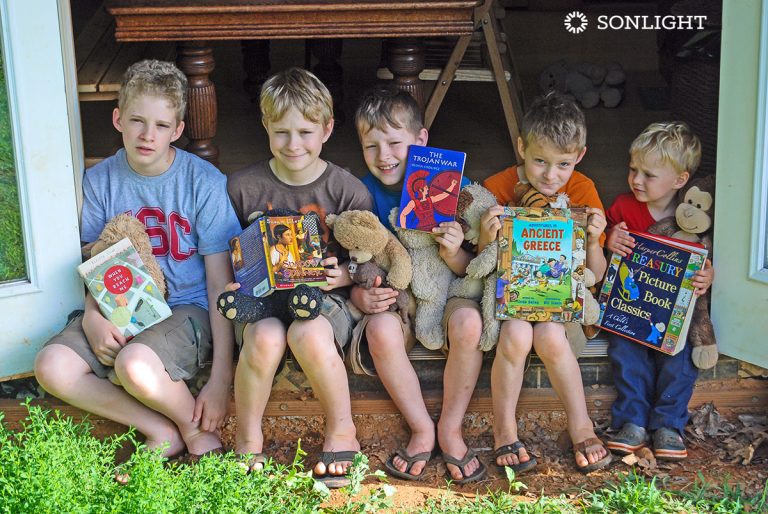
How Reading Fiction Helps Kids Develop Empathy

Share this post via email


Submit
How Reading Fiction Helps Kids Develop Empathy • Sonlight Curriculum

You know that reading helps your children develop vocabulary, become great writers, and receive information in a way they actually remember.

But did you also know that reading, particularly reading fiction, helps your children become more empathetic, able to understand and share the feelings of others?

Why is empathy important?

  • Empathy helps children develop a heart of compassion for a broken world.
  • Empathy helps children care about more than possessions, so they focus on people and relationships instead.
  • Empathy helps children see beyond themselves, so they are aware of the others who God puts in their paths.

How do books help develop empathy?

Children aren't born with the ability to guess at people's inner worlds; it's something they must learn. And first, children must learn that other people even have emotions and desires distinct from their own. In real life, you may get an occasional glimpse into other people's minds, like when a friend tells you what she's thinking or how she’s feeling. Usually, however, you can only guess at the thoughts, emotions, and motives of others.

Reading fiction takes you outside of yourself, out of your own thoughts, and into the mind of another person. You enter into the world of others and experience life through their eyes. You consider their predicaments. You hope that things work out for the good guys.

In one book, you might read about a girl whose friend is unkind to another girl in the class: How should you respond?
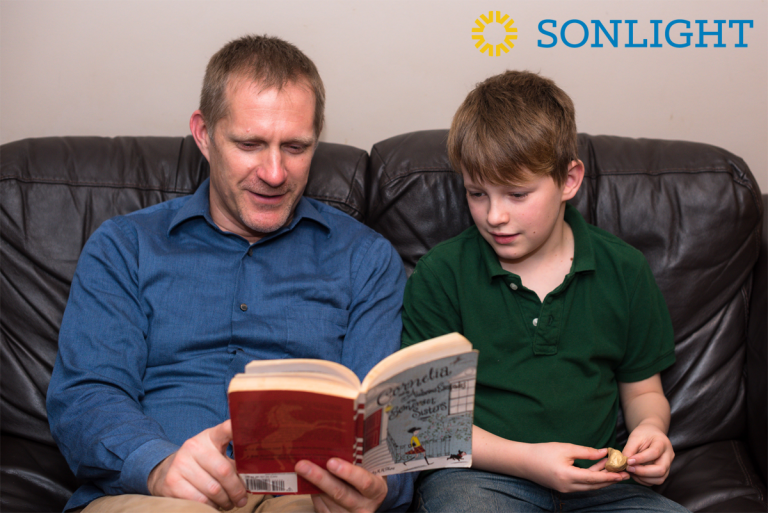

Or you read about a boy who is learning what it is to be a man: What does responsibility look like? How should you deal with fear? What is the appropriate use of violence (or is there any)?

Or you read about a family who befriends a lonely boy: What does kindness look like, especially in difficult situations?

As C.S. Lewis described reading in An Experiment in Criticism...

"We want to be more than ourselves. . . We want to see with other eyes, to imagine with other imaginations, to feel with other hearts, as well as with our own. . . [I]n reading great literature I become a thousand men and yet remain myself."

Fiction helps you imagine what others are thinking and feeling and trains you to feel empathy for others.

If you are considering a new direction for your children’s education, and could use an empathetic ear, we have experienced homeschooling moms who would love to talk to you. Click here to connect with your homeschool consultant.

Share this post via email


Submit
Tagged , , , | 2 Comments

Three Reasons to Read Out Loud to Kids Who Know How to Read

Share this post via email


Submit
Three Reasons to Read Out Loud to Kids Who Know How to Read • Sonlight Curriculum

You probably understand the appeal of reading aloud to young children. Who can resist a preschooler, book in hand, saying, “Read, pwease?”

But once children can read for themselves, parents often assume their days of reading aloud are done. In fact, a survey by children’s book publisher Scholastic showed that most parents stop reading to their children by age six.

Sonlight parents, though, don’t stop reading to their children at six. Instead, Sonlight’s programs include Read-Alouds all the way through middle school. Here are three reasons why.

1. Children want their parents to read to them.

One of the surprising findings in the Scholastic survey I mentioned is that many children wish their parents had continued to read aloud to them after they could read for themselves. Children love the special time and shared experiences of reading together. Even if older children don't want to sit on your lap like they did when they were three, they still enjoy the experience of sharing a book with you.

2. Children have a "reading gap."

Until eighth grade or so, children can comprehend a much higher level of writing when it's read out loud to them than they can when they read on their own. This “reading gap” happens because the mechanics of reading can be tricky. It’s similar, perhaps, to writing. You know that when a child is just learning to form her letters, she can only write a few very simple words, though she could tell you a much more complicated story when she's talking to you. It's similar with reading. Reading out loud to your children up through eighth grade helps them access ideas, vocabulary, and concepts that would otherwise be out of reach. Just because your children wouldn’t want to read a book to themselves doesn't mean it's not perfect for them if you read it out loud.

3. Reading together builds relationships.

Reading together is such a precious time to spend with your children. It's a break from a busy day, as you get to slow down and immerse yourselves in a story together. When you share a book, you and your children will go on remarkable adventures together—through history and throughout the world. Reading together also provides opportunities for your children to ask you questions about things they wonder about, such as love, loss, careers, family, and what it means to follow God.

Many Sonlight families say that inside jokes from books they've shared together have become part of their family culture.

Your school-age children want you to read to them. You not only help them academically when you read aloud to them, but you also expand their understanding of the world and deepen your relationship with them.

Request a Catalog

To find out more about Sonlight’s unmatched Read-Alouds, and our complete book-based homeschool programs, order a complimentary copy of your catalog today.

Share this post via email


Submit
Tagged , , , | 4 Comments

If your home won’t look like a magazine spread this holiday

Share this post via email


Submit

I saw an email from a fancy grocery store chain this week. Packed with culinary tips for Thanksgiving, the tone of it suggested that my self-worth depends on me presenting a gorgeous and complex feast next week.

I laughed because I’m here to tell you, I gave up on that ideal a long time ago. I don’t like to cook, and I don’t prepare a fancy Thanksgiving meal.

But that doesn’t mean that Thanksgiving isn’t special in our family! We’ve just found other traditions and ways to make it meaningful. We cherish that special time together, and our traditions are our own quirky style.

On that note, let’s all remember that our society will be in overdrive these next six weeks of the holiday season. You will be bombarded with Pinterest images and blogs telling you what you “should” be doing for your family. Some will truly inspire, and many might make you feel inadequate.

But as you prepare for Thanksgiving next week and then the Advent and Christmas season, I’d love to remind you: You are already enough. Christ has already redeemed you. Your salvation is not dependent on how well you conform to society’s expectations of you this season.

You will see countless ads whose first goal is to make you dissatisfied with your home, your plans, your food, your gifts, your clothes, your gadgets, or your family. So let’s walk into that with eyes wide open this year. No big box store or grocery boutique gets to decide for you what you and your spouse want for your family. You, your spouse and God decide that!

As you juggle homeschooling and all your other duties these next weeks, I’d like encourage you: don’t try to copy anyone else’s holidays this year. Do what is meaningful for you. Do what brings your family joy. Do what truly blesses others. Do what helps you all focus on Christ and Christ’s Kingdom.

What does that mean for you?

God bless you and yours, and enjoy a very blessed Thanksgiving!

Sarita

Share this post via email


Submit
Tagged , , | Leave a comment

Sonlighters Have a Heart for the World

Share this post via email


Submit

I write this one with some trepidation. You know the Great Commission: “Go ye into all the world and preach the Gospel to every creature.” I am not nearly as Great Commission-minded as I wish I was.

I grew up reading the Global Prayer Digest every night after dinner. I had a period in my adult life where I would get the annual 30 Days of Prayer for the Muslim World guide, and pray in a more focused way during Ramadan, the Muslim month of fasting.

Right now, though, I’m lucky to keep my younger boys’ attention during Window on the World, and to pray a bit as I go about my day.

So I recognize that “a heart for the world” is not as primary in my life in this season as I wish. I do seek to be faithful and pray that my heart might be bigger.

A few years back, a Christian was thinking about how to deal with the rise of terrorism. And he thought, “Terrorists need Jesus! I can pray!” And so he began the organization “Adopt a Terrorist for Prayer.” You can go to atfp.org and sign up to pray for a terrorist. That seems like something Sonlighters would like. It’s a bit outrageous. It’s a chance to change the world.

I love that, for long-time Sonlighters especially, when you read that previous paragraph, you probably either thought, “I should do that,” or, “I don’t have time for that.”

But you probably didn’t think, “Why would I want to pray for terrorists?”

Because, distracted as you may be, as stretched thin and weary as you may find yourself, you still have a heart for the world.

And if you haven’t done Sonlight for very long, you haven’t had much opportunity yet to read missionary biographies, to pray for various people groups around the world, to learn about the ways that God is at work in the world. But you will!


Warmly,
Amy's pic

Amy Lykosh
John and Sarita's oldest daughter
Second-generation Sonlighter
Homeschooling mom to five

Share this post via email


Submit
Tagged , , , | Comments Off on Sonlighters Have a Heart for the World

Sonlighters Talk with Their Children

Share this post via email


Submit

One thing I notice when I'm around my Sonlighting friends is how much they talk with their children.

When, for example, the 10-year-old comes up to ask a question, my friend pauses the conversation and she and her son interact. Her son matters. He has value.

I also have watched Sonlight parents explain things to their children, spontaneously, because the world is interesting. A few examples from the grocery store. When faced with the number of eggs and the various labels: what does it all mean?

Most hens live in cages. This keeps them safe, and keeps the eggs from being expensive, but it's not very comfortable. So some people don't want eggs from hens in cages. Those eggs are "cage-free." The hens might live inside their whole lives, but they are more free to wander around. "Free-range" means pretty much the same thing, although they have a door in the wall, so they could go outside, though maybe a fan keeps them from wanting to. The most expensive eggs are "pasture-raised." It is nice for birds to be able to eat grass and bugs, but it is also dangerous for them, as they can be picked off by hawks, or eaten by foxes. And the label "vegetarian feed" means that the hens were always inside, hens eat bugs. The only way to make sure that they do not eat bugs, is to keep them away from bugs, by keeping them indoors. "Natural" means nothing, because every single product on Earth comes from something on Earth. It's all "natural," even cotton candy! " Organic" means that the feed and care followed a specific set of instructions: no hormones, no genetically modified feed, no automatic antibiotics in the feed.

And then, in produce. . . .

I think I'd like a watermelon. Do you know how to choose a watermelon? You knock on it to make sure it sounds hollow, and then pick one that is heavier than you'd expect for its size. I read, too, that it should have a yellow spot, which means that it ripened in the field (the yellow spot is where it rested on the ground). I don't know if I've ever seen one without a yellow spot, but maybe we'll find one today!

Of course, not every trip to the grocery store is filled with great educational moments. But the world is interesting, and we, as parents, get to share it with our children. And because we Sonlighters spend part of our days interacting with our children, and learning together, there is always more to talk about.

I appreciate that I can talk with my boys about everything from nutrition to inappropriate touching, from the origin of life to what we liked most about the latest Pixar film. And because we've also read about a wide range of topics, even the most difficult topics don't feel (too) embarrassing. Those topics are just part of education.

This is something that I see in the Sonlighters I know, and I suspect it's true of you, too. You engage with your children. You talk with them because they are real people.

I love how much Sonlighters talk with their children. Thank you for doing that.

Share this post via email


Submit
Tagged , , , | Comments Off on Sonlighters Talk with Their Children

What We Love about Sonlighters

Share this post via email


Submit

My Mom, the founder of Sonlight, sometimes says, "I can always tell when someone is a Sonlight user. There's a connection there."

And that comment is fuzzy, but I think she means that there are things that all Sonlighters love and appreciate. We value similar things.

That's what this series is about. I think of it as a kind of group hug, thinking about and celebrating the way that we Sonlighters enjoy homeschooling.

These are things that we, as Sonlighters, like.

Sonlighters appreciate good books

These days, there are so many options for schooling and entertainment. Reading is not quite dead, but with the rise of television and video games, organized sports and social media, books seem a bit retro.

So I appreciate, first of all, that Sonlighters read.

And I appreciate even more that Sonlighters recognize the Sonlight type of good book.

  • Books that don't hit us over the head with moralizing, but offer real people who deal with real, and challenging, scenarios.
  • Books that make us laugh, and love this beautiful world.
  • Books that make us cry, and grieve for this broken world.
  • Books that don't overwhelm with darkness, but also don't pretend like darkness doesn't exist.
  • Books that maybe don't have the best cover . . . but Sonlighters know not to judge a book by its cover anyway, and so we find new favorites, hidden gems, like Red Sails to Capri and Shadow Spinner.
  • Books that maybe aren't the most cheerful to read, but lead to rich conversations.

In a world of worksheets and textbooks, in a world of digital techno wizardry, I love that Sonlighters remain connected to stories.

Recently I was watching a series of lectures on the importance of physical photo albums. (There is a longer story here, so that’s not quite as random as it sounds). The speaker said that studies have shown that students who use real textbooks, instead of digital textbooks, learn 40% more.

And, of course, Sonlighters use living books, and not boring textbooks, but the point is that a physical, material object is more memorable, and more helpful for learning, than digital information.

So, as Sonlighters, we get the joy of stories, and have the confidence that the research confirms that using real books is an excellent method of learning.

I like that.

Warmly,
Amy's pic

Amy Lykosh
John and Sarita's oldest daughter
Second-generation Sonlighter
Homeschooling mom to five

Share this post via email


Submit
Tagged , , , , | Leave a comment

Am I Missing Something? That Didn't Take Very Long!

Share this post via email


Submit

***For those who are teaching older children or dawdling children, or who are stunned by how long school is taking--this post isn't for you.***

Depending on the age of the child you are teaching, you might be surprised by how little time school takes. Especially if you sent your children to school for a year or two, and then you finish your homeschool subjects in an hour or two--you might wonder is that really it?

You may have seen the article by a public school teacher about how the actual instruction on any given day equals about 51 minutes. See here.

So if you are only getting to about an hour a day--that's approximately all that the public schools are doing, too. And a Sonlight education is, as we hear over and over, far more robust.

But however long Sonlight is taking, if you feel you and your children have a little more attention or energy to dedicate to learning--what then?

Add More Subjects

This is, perhaps, too obvious. But if you have a little more time, you can pursue other subjects. (See the bottom of this post for all links.)

For example, you can add art. I have used Sonlight's ARTistic Pursuits books (and so appreciate the quality, price, and convenience of the Sonlight art supplies). Both my children and I enjoy them, reading the art history, talking through the fine art examples, and doing some (not all) of the projects.

You could add music. Sonlight offers some piano resources, like Piano Wizard and Bastien. Or you might prefer the online piano tutorial, Hoffman Academy. Children gain huge benefits, from starting music early.

You could add foreign language, whether Rosetta Stone or some other program.

You could do cooking lessons. Even boiling noodles and making no-bake cookies require a little skill in the kitchen. I got married before YouTube was a thing, and took a class to learn how to efficiently chop onions and cook a whole chicken. These days, you can learn almost anything you need online, and then teach your children.

You could add as much enrichment as you like. At our house, this tends to be things like the Classical Kids Collection, and listening (over and over) to Adventures in Odyssey.

We do audio books, chess, board games. There are some incredible options out there.

If you have more time in your day than you have subjects . . . add more subjects!

Warmly,
Amy's pic

Amy Lykosh
John and Sarita's oldest daughter
Second-generation Sonlighter
Homeschooling mom to five

P.S. Here are the links from this post:
Artistic Pursuits
Piano Wizard
Bastien
Rosetta Stone
Classical Kids Collection

Share this post via email


Submit
Tagged , | Comments Off on Am I Missing Something? That Didn't Take Very Long!